Marketing Kyrgyzstan
During 2010, Kyrgyzstan has seen a drastic reduction in the number of tourists that have visited the country as a direct result of events that have taken place in the country throughout the year. There were tourists, but many less than in previous years. This has led to a reduction of income for those working in tourism, (tour operators, hotels, guesthouses, restaurants, guides, drivers, horsemen, makers of souvenirs, etc.) fewer workplaces and hence impact employment levels within the Republic, an impact on the GDP of the country, (including a loss of valuable foreign currency earnings), and a reduction in tax revenues from tourism.
There are several sectors of the tourism industry in Kyrgyzstan. The main one in terms of both the numbers of visitors and monetary value, is Recreational Tourism – mainly involving visitors from Kazakhstan to Lake Issyk Kul. Another sector involves various types of Active Tourism, or Adventure Tourism – involving such activities as Mountaineering, Trekking, Horse Riding, Rafting, Hang gliding and similar activities – which are centered on utilizing Kyrgyzstan’s natural environment. Also there is Travel along the Silk Road which attracts mainly visitors from “Western” countries. In this sector might be considered Cultural and Historical Tourism – which center on the cultural and historical heritage of the country – especially the traditional nomadic culture of the Kyrgyz – which is of particular importance to those in Community Based Tourism (CBT)groups in more isolated and remote parts of the country. In addition there are specialist, “niche”, markets, such as Health Tourism, Hunting, Winter Sports and Business Tourism (MICE) where the primary purpose of travel is not Tourism, (rest and recreation), but connected with some other business activity such as attending a conference. Then there is Domestic Tourism – which played an important role this year in providing employment for people in the Issyk Kul in the absence of tourists from the traditional markets of Kazakhstan, Russia and Uzbekistan.
It is important to note that all sectors of the Tourism industry affects not just those who work directly in the industry itself, for example in tour companies and hotels, but also people working in a much wider variety of activities: cafes and restaurants, the manufacture of souvenirs made from traditional crafts, performers, museums, transport, (public and private), and so forth. The goods and services purchased by the tourist contribute to the economic activity within the community as whole. Tourists use facilities which are also provided for the population such as energy, and food is purchased in shops and bazaars to serve them.
All sectors of the Tourism Industry have suffered a reduction in business during the year – some more than others. Many tour companies operating tours along the Great Silk Road reported operating at between 10% and 40% as the previous year; the number of visitors to the reports on Lake Issyk Kul was about half of that in previous years.
Although the reduction in the number of visitors can be attributed as a direct result of the events that took place since April 7th, there was also a considerable contribution to this decline by Travel Warnings issued by foreign Governments warning their citizens about travelling to Kyrgyzstan, and the reporting that took place in the world’s media. Many tourists cancelled or rearranged trips that had been booked, so as to avoid parts of Kyrgyzstan (e.g. Osh and Djalalabad) or to avoid Kyrgyzstan altogether. On the other hand, those that did come to Kyrgyzstan reported that accounts in the media suggested that the situation was considerably worse than they experienced during their stay. The amount of “black PR” was especially noted in Kazakhstan.
More importantly, perhaps, this publicity has had an effect on enquiries and provisional bookings for the coming year, 2011, which are considerably less previously than at this point of the year. Some tour companies are reporting that they have no provisional bookings for next year at all. So, as well as having suffered an actual reduction in the level of economic activity in the tourism sector during the year, there is a loss of potential economic benefit in the future.
Many tourists, especially those from distant markets, plan their holidays well in advance, and so even though a referendum and election may be held successfully and stability return to political life in Kyrgyzstan, the time for publicizing the tourism potential of the country is now – sooner, rather than later.
Following the revolution in March 2005, the new government and the industry jointly undertook a number of measures with a view to “Save the Tourism Season”.
It is difficult to compare the situation in 2010 with that in 2005, (even though both Revolutions led to a change of government), because the situation this year was far more serious and lasted longer. However, it is worth noting that in 2005, the effect of the revolution on Tourism was fairly contained when compared to what the industry has experienced this year.
There is a saying that “Extraordinary situations require extraordinary measures” – and no-one can deny that we have faced an extraordinary situation this year.
There are several aspects of the tourism industry which it is necessary to note, that single it out as different from many other areas of economic activity, such as manufacturing.
Firstly, it is seasonal – and in Kyrgyzstan the season is short, very short. The “high season” when most of the activity is undertaken is a matter of just a few months.
Secondly, any investment in tourism (whether capital expenditure or expenditure on activities such as Marketing) is long term expenditure and takes a longer period, often in terms of years, to be recouped. However, losses are incurred immediately.
Thirdly, as most travelers and tourists like to explore new destinations and receive new experiences, it is necessary always to find new clients or customers.
Potential clients, (that is, tourists), have a wide choice before them. They cannot be compelled to visit Kyrgyzstan, we need to persuade them that it is an interesting country, with lots to offer them in terms of attractions, (natural and manmade), that is safe and can meet their needs and their interests.
Tourism products involve not just the goods and services which the tourist purchases, (and it is the responsibility of those selling such goods and services to market these aggressively and effectively), but include the inherent aspects of the destination, (in this case Kyrgyzstan), such as the landscape, environment, wildlife, people, history and culture, (and these also need to be marketed – separately and in addition – in order to attract potential tourists.
It is important to publish as much positive information about Kyrgyzstan as possible – it is then the responsibility of tour operators, hotels, manufacturers and investors to market their own goods and services independently.
“Brand Familiarity” is an important concept in marketing. In this case, the brand is Kyrgyzstan – and in particular Kyrgyzstan as a Tourism Destination. The more times Kyrgyzstan is featured in the foreign press, for example, then the more familiar the foreign public will be with Kyrgyzstan. It is, of course, important that the image presented in the press is positive – which means that much must be done to counter the negative coverage has received – and is still receiving at the moment.
It is also necessary to point out that, expenses on marketing Kyrgyzstan as a country (not just as a Tourist destination) helps to raise the profile of the country internationally and promotes the image of the country, (it’s nature, people and culture), to attract interest from investors, raise awareness of Kyrgyz products such as Fruit and meat products. All of these areas of Kyrgyzstan’s economic life, not just tourism, could benefit from a campaign to create a positive image of the country abroad.
This raises an important question: Who should undertake this campaign?
I would suggest that this is something which requires the involvement of the State. We are talking about the image of the country as a whole – not just an individual company, (be it a tour company or a resort on lake Issyk Kul), or even, as I have tried to suggest, just the tourism sector – but Kyrgyzstan as a whole. The whole community stands to benefit from such a campaign.
I am not suggesting that the State should support individual companies, by promoting individual tour products, etc., but that it should concentrate on promoting the country as a whole: the mountains, the traditional nomadic culture, the history, the wildlife, and so forth. In short the vast potential of the country. It is then for the individual companies to promote their own products and services.
It is true that the beneficiaries of such a campaign would undoubtedly include individual companies working in the tourism industry – be they tour operators, hotels, resorts, restaurants or manufacturers of souvenirs, but the benefits would also be reaped by other sectors of the Kyrgyz economy and ultimately, through tax revenues, the state itself..
Written for “Tourism in Kyrgyzstan: Practice, Problems and Perspectives”


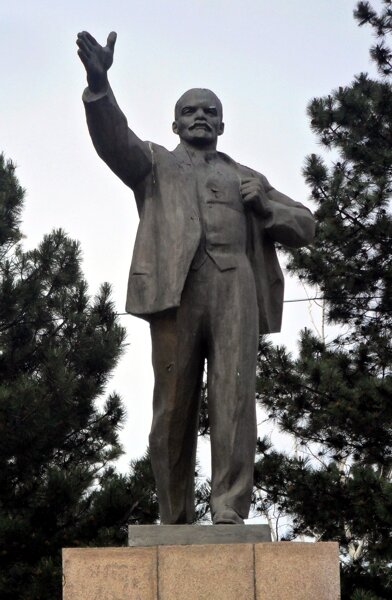


 Bishkek