Chupacabra
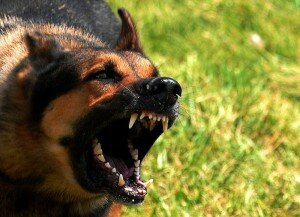
Hardly a Chupacabra – but definitely not some thing not to be “messed with”
There have been some interesting reports in the press over the last couple of weeks, coming out of Kochkor.
It all began with a report that a special commission had been set up to investigate reports about the appearance of an animal that had started attacking and killing livestock in the region. The creature has been dubbed the Chupacabra.
For the record The Chupacabra is a legendary creature that is supposed to be found in Central America – the name deriving from the Spanish for “goat sucker” – a reference to it’s tendency to drink blood from its victims. Variously described as being like a small bear with spines down it’s back, some instances in the states have been traced to dogs with mange mistakenly identified due tho their savage appearance.
Now, when I first saw the report, my initial thoughts were along the lines of: “wot the …?”. I had never heard of this creature before – which is not surprising because it is a fairly modern, the first reports of it being recorded in only 1995 – so, I had to go and look it up. Those first reports were from Puerto Rico, far away from Kyrgyzstan, which raised the obvious question of how did it get here – I half expected to see claims that Americans had brought it over to the Manas Transit Center when that was operating … but no-one seems to have thought of that.
It was reported that over a dozen sheep had fallen victim to this creature … and a week later the toll had risen … 36 sheep, a goat, 38 hens and 12 rabbits. In reply, the hunters have chalked up 117 stray animals … Livestock – 87, Strays – 117 – that’s quite a scoreline.
These more recent reports, however, whilst admitting that there si speculation about the Chupacabra, the authorities have been playing down the possibility of supernatural or mythical creatures … raising the possibility of dogs, wolves, jackals, or other more mundane (and likely), culprits … raising an image of a threatening and sinister Hound of Kochkor.
The situation is being taken seriously. The commission was quite a high powered one, including the deputy governor of the Naryn region acting as its head. It was to consider, among other things, the various reports that were being submitted by members of the public including:
- accounts of attacks on farm animals …
- claims that it lived in the local cemetery,
Traps were set and hunters were equipped with special smoke pellets to help flush out any specimen that is found … and will presumably dispatch the animal once it is flushed … that’s actually what one early report said – nothing about trying to catch the creature, for study or … well, anything.
I suppose that this is not all that surprising … whatever is out there is attacking and killing livestock … and that’s always taken very seriously here. (Hey, even in the West dogs that “worry sheep” are considered a pest and “fair game”). It’s one of the reasons that every now and again, a campaign, or cull, of “stray” animals is ordered, with a bounty paid for every animal duly dispatched.
For the record: up in Naryn, we actually lost one of our dogs in such a cull – someone had left the gate open and he decided to go for a walk … he was about a hundred yards from the guesthouse when one of those “bounty hunters” spotted him, tracked him as he wandered along the pathway and, in what conjures up images of the TV Game show The Golden Shot … he loaded his rifle, raised it and took aim, ” … left, left, right a bit, down a little, stop!, up a bit … Fire” … and that was that.
It may seem harsh to be making a “joke” out of something like this … but, in a way it is an attempt to dissipate the anger and disappointment. It’s a form of coping strategy.
He wasn’t my dog … that didn’t make it any easier to cope when I heard the news. He actually “belonged” to one of our staff in Naryn … so, for that matter, was he a stray dog … OK, someone had left the gate open and he had taken his opportunity and wandered off our property … “straying” from home … but he was no where near to any livestock … OK, it is true that he could be loud and exuberant, but basically he was friendly … and he wasn’t posing a threat to any livestock … He certainly wasn’t an imposing and threatening Hound of Naryn … There He had a name, and was known to our neighbours … who, in a remarkable show of solidarity, turned on the marksmen saying “Why did you have to shoot him …?”
Actually, although the incident raised a lot of emotions in me, I didn’t feel any anger or resentment towards the marksmen … that wasn’t really my place as it wasn’t “my” dog. I felt more anger and disappointment directed at the person who left the gate open … a simple but thoughtless and careless action.
In fact. I sometimes use this incident as an example, a sort of parable, when I want to make a point of the possible serious and unintended consequences that can arise out of seemingly innocent actions.
The marksmen, after all, were “just doing their job”, no matter how distasteful or regrettable it might seem, and were following the rules and regulations laid down by the authorities … who had to find a way to deal with a real and actual problem, (and not just a “perceived” one).
Also, I have to wonder about the emotions of the the shepherd who loses his livestock to such attacks. They also suffer loss – and not just a financial one.
We have a similar problem here in Bishkek … with hundreds – if not thousands of stray animals that roam the streets – sometimes in packs of half a dozen or more individuals – ranging in size and temperament. Many citizens of Bishkek actually report that they are often frightened by them … and they can appear to turn “aggressive” for apparently no reason, although, I suppose, it could be just a case of “putting on a show” – perhaps a case of their “bark being worse than their bite”.
On the other hand these “strays” can, and sometimes do, have a bite.
On the other hand they have been known to bite … especially young children who “fearlessly”… and foolishly … approach one hoping to “pet it”. Apart from having to cope with the fright and the resulting psychological trauma … there can be a serious risk of worse … I know, for example, a preschool girl who was psychologically and emotionally shocked from her encounter with one small dog … hardly a tratening and impossing Hound of Kievskaya. It took her a long time to recover her confidence in the presence of animals – even my cats – and for her parents it was worse. Apart from the fear that she would forever carry a scar – fortunately it has since cleared up and healed itself – there was the worry, no matter how unlikely, of the possibility of a rabies infection … .
There has been some concern expressed about this practice of shooting stray animals … and although most of it seems to come from abroad, there are a number of locals who are vociferous in their condemnation of our “inhumane” treatment of these “dumb” animals. (However, Believe me, they are not dumb in either sense of the word – unable to utter sounds or as being stupid.)
The previous Mayor of Bishkek was even put on the defensive. In trying to explain the policy he pointed out that there were no alternatives – the cost of operating a dog pound would be far too great – and the city just simply doesn’t have the funds available … so it all boiled down to the “bottom line” … a case of “affordable ethics”.
He was, however, persuaded to include this as a possible provision for a future budget. Now that he is no longer mayor, it will be interesting to see if is followed through up … or disappears into oblivion.
Personally, I don’t think the proposal stands much of a chance … although I will be delighted to be proven wrong. The challenges to the current policy are based on emotion, whereas in its defense there are two overwhelming arguments – economics and practicalities.
Attacks on livestock do cause considerable losses to the farmer … whether the culprit is a wild animal like a wolf, jackal, fox even a snow leopard or a chupacabra … or perhaps a stray dog. It presents a real problem. In parts of Pakistan, a conservation scheme aimed at protecting snow leopards in the wild involves a system of paying compensation to farmers for livestock lost to attacks from snow leopards has been piloted, with (or so I understand) some success. Instead of setting to hunt down the culprit, assured of the “insurance” payment, the aggrieved farmers have turned from seeing the bars (snow leopard) as a threat that must be eliminated and they seem to be more accepting and proud of their feral neighbour. However, someone has to pay the compensation, and it will be interesting to see how the scheme is sustainable once donor support for the project expires.
Likewise, the possibility of providing a dog catcher and pound service for controlling the stray population in the towns and cities may be established, with some external financial support, but the scheme will need to search for long term funding … which I am not sure I can see over the horizon.
So, it is a real and actual problem … and the current policy does address it … and seems to work … although one might want to question its effectiveness if the attacks continue over the course of time.
Another thought that comes to me is, I wonder what side in this debate might the great Kyrgyz author, Chingiz Aitmatov, have taken. Aitmatov was a man of his time and his people … who is extremely well respected and revered, but he was also someone who was not unwilling to take a fresh, and sometimes critical, look at the things around him, challeging his readers to consider alternative realities.
In his novel The Place of the Skull, (a reference to Golgatha – where Jesus was crucified), which appeared under the name Plaka (Scaffold) in Russian, when it was published in 1986, one of the intertwining themes is the interrelationship between a man and his family on one side and a wolf and his family on the other. It struck me that, rather like Shakespeare’s Merchant of Venice , this story broke new ground in trying to bring a greater awareness, understanding and even sympathy for a long perceived foe … arguing for a new approach and respect to be shown to our compatriots in the environment that we share.






 Bishkek