No show
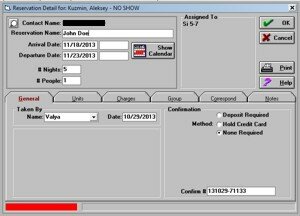
No show
One of the things I found challenging about teaching a subject like Computing and Information Technology is that you are expected to know, and teach about, all sorts of things that are nothing to do with computers – much more so than in, for example, Mathematics.
Computers are omnipresent, found and used everywhere in society, and you have to explain how and why they they do certain things. The classic cases that spring immediately to mind are stock control and booking reservations.
The intricacies of maintaining accurate stock records, stock movements, just in time stock levels, minimum stock, reorder level, reorder quantities, picking lists, delivery notes and routes, seasonal variations, manual and automatic systems and so on, was a challenge to the class who had never had to think about such things … but the issue that always aroused their collective indignation was the common practice of airlines and hotels to “overbook” – accept a small amount of reservations greater than they had the capacity to cope with … in order to account for the effect of No Shows.
No Show is the term given for when someone who is expected, but for various reasons does not appear … neither cancelling nor using the service which they have requested.
There may be all sorts of reasons for their non appearance – after all, people’s travel plans do change. Perhaps there has been an accident or they have fallen ill; they may have missed a flight connection. Maybe they have had to extend or cut short their planned stay – for example, if they have lost or had their tickets and/or passports stolen.
The worst case I have encountered involved a client who was already at the airport and about to board their flight to Kyrgyzstan when they received the news of the death of a close relative …
Whatever the reason, they have been unable to contact the airline or the hotel in order to cancel their reservation … or maybe they have simply forgotten.
I used to think that the number of No Shows would be quite small … and we are very fortunate in that, in Naryn, it is – although some people who have reserved accommodation sometimes don’t actually turn up, it is very much the exception – much less than 1% of all the bookings we take.
In the airline industry it is estimated that somewhere between 7 and 8 per cent of travelers do not show up for their flight … and in the Silk Road Lodge, (our hotel in Bishkek), the No Shows can reach about 5% of all bookings.
Now that figure did come as a surprise – As I said, there are lots of reasons why No Shows occur – and, in the past, the main reason seems to have been “missing the flight” for one reason or another.
As a result, it is common practice to accept a few extra bookings on the relatively few occasions when a flight or hotel is fully booked … and then make alternative arrangements for the surplus travelers if, in fact, everyone does turn up. An airline may issue a voucher which can be redeemed later, organize accommodation if necessary and arrange for the traveler to be placed on the next available flight – sometimes, if necessary, with a different carrier.
Although the practice of Bumping travelers in this way may not be very popular amongst those who are affected, (and it may lead unpleasant moments as disgruntled passengers argue with airline staff about it), there are actually some people who are perfectly happy to accept the offer of a voucher, an extended stay and, perhaps, an upgrade on the flight.
When you think about it, it is easy to see why an airline might choose to overbook flights: each empty seat represents a “lost of income”, but they also have to consider the cost of paying of the “compensation”, (the vouchers and hotel accommodation), for travelers that that they had to bump … couldn’t fit on the full flight – and also the lost “customer loyalty” that follows. However, the mathematics suggests that with some fine tuning it might well offer a mechanism for maximizing revenue … and profits.
Most airlines will have internal policies outlining a hierarchy for deciding which of their clients can be bumped … for example, they will not overbook their prestigious Business or First Class seats, and members of their Frequent Fliers loyalty programmes will be “guaranteed a seat”, but Economy Class passengers may be offered an inducement to accept a voluntary bump … or simply told that, with regret, the airline has no option but to take this action … especially when dealing with “latecomers”, after everyone else has been assigned a seat and has their Boarding Pass.
In addition to overselling a flight, the airline may also have a standby list – a waiting list – and offer any unclaimed seats to people on the standby list in the last few minutes before boarding. so it pays to arrive at the airport earlier rather than later if you want to avoid being bumped.
In fact, very few people do get bumped from their flights. According to statistics from the Department of Transportation in the United States, only something like 0.01% of all passengers do get bumped … and although that might add add up to quite a number of individuals, this is balanced by a considerable loss of potential income represented by the considerably larger number of No Shows.
For the record: American law requires that airlines seek volunteers first of all … and their performance in this respect is closely monitored. This, of course, means that they try to offer a reasonably attractive package … along with trying to avoid upsetting their clients.
.
Hotels undertake to find and walk their guests to alternative accommodation of an, at least, an equivalent standard … and to pay any additional costs over the rate they would have charged in the event that the alternative is more expensive … which makes a perfectly good incentive to avoid having to walk someone.
In fact, in our hotels, we don’t overbook: ‘… a booking is a booking … is a booking“. If we accept and confirm a reservation, then we have entered into an obligation to provide the accommodation … and if we don’t have any rooms available for the required date, then we ask if the client would like to be placed on the “waiting list”, so that if we do receive a cancellation we can contact them ask - offering them the rooms if they are still looking for accommodation.
It does happen that on the odd occasion, we have found ourselves in difficulty … for example, when a guest has asked to extend their stay … but we have already confirmed bookings for those rooms and so have to decline … or help find alternative accommodation. On a couple of occasions, we have been late in withdrawing the rooms on offer from the website of an On-line Travel Agent … and have had to find alternatives.
The problem for the hotel is that by accepting the reservation, they have entered into a commitment to provide the accommodation … and as a result cannot offer that room to other potential guests … so, if a guest does not actually arrive, they lose the possibility of raising income from their assets.
One technique employed by hotels around the world to avoid the loss of income incurred from No Shows is to ask for a deposit equivalent to the cost of the first night’s accommodation. In return for this payment, the hotel guarantees to keep the room available for that night and only releases it so that it can be offered to other potential clients in the event of a No Show on the second and subsequent nights.
As it happens, we don’t ask for a deposit … although that may change in the future. It’s a balancing act … although it would be nice to have the confidence that we had received payment for the first night’s accommodation, it proved to be more difficult to obtain one as:
- the banks here are reluctant to accept payment unless the cardholder is present and the card is physically swiped through a terminal;
- people are naturally reluctant to pass credit card details over the internet … especially to somewhere like Kyrgyzstan, even if they might be happy to do so in, for example, Europe or America … ;
- and then there is the problem of refunds in the event that they do cancel and cancellation takes place sufficiently far in advance – which lays us open to one of the main credit card scams … and the risk of having to indemnify the credit card company in the event of the card having been stolen;




 Bishkek