Much ado about something …
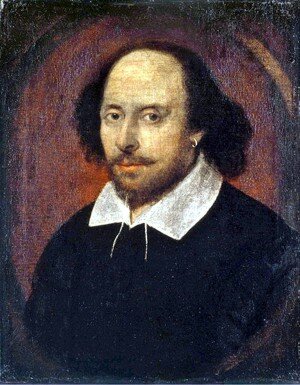
The Bard: William Shakespeare
The other day I was having a chat with another ex-pat who put to me an interesting question: “Are you an Oxford man …”, to which I was about to say “Yes … albeit by ‘sneaking in through the back door’”, but then he continued, “… or a Shakespeare man.”
I realized that he wasn’t referring to my unorthodox education but to the controversy about the authorship of of some thirty seven plays and a host of poetry in the late sixteenth and early seventeenth century. Were the masterpieces of English literature penned by a Warwickshire lad (William Shakespeare) or a member of the English Aristocracy, (the Earl of Oxford).
In fact, these aren’t the only two contenders … there are others for whom the honour has been claimed … but they seem to be the front runners in the current debate.
I admitted that I hadn’t the faintest idea … and, indeed, I didn’t think it was all that important. The plays stood on their own merit, not on the reputation of their author.
I always find it odd when a new work is discovered hidden away in some archive, an attic or a cellar, and it is hailed as possibly being from the hand of some famous author, composer or artist … as if that automatically gave it some additional artistic value. I take the view that it should “stand or fall” on its own merits … and although it might have some special historical significance, giving us an insight into the workings of the mind and the techniques of the “master”, it doesn’t mean that the work has any intrinsic value and may still be “dross”.
A photographer, for example, may take hundreds of photographs in a session … but only a handful of them may be “excellent”. Others, although they may be good, will lack that “special something” that makes it a brilliant photograph … whilst others may well be flawed in some way that they only deserve the title of “a snap”.
There may be all sorts of reasons why the new discovery has lain undetected over the centuries … maybe it remains unfinished – perhaps interrupted by death, or pays laid aside for a period and never taken up again, or maybe the author was dissatisfied with it for some reason and didn’t want it to be included in their legacy … perhaps they consider it will detract from their reputation by ‘dragging down’ the other opuses (if that’s the right word) of their collected works.
Everyone seems to have heard of William Shakespeare … and there is probably some justification for that. Not only was he prolific as a playwright … although I suppose some people have written more … he was also a poet … and was the author of may phrases that have their way into everyday language and persist tight down to the modern day. He was also prolific in coining new words, over a hundred of them, including:
academe, accused, addiction, advertising, amazement, arouse, assassination, backing, bandit, barefaced, beached, bedroom, besmirch, bet, birthplace, blanket, bloodstained, blushing, bump, buzzer, caked, cater, champion, circumstantial, cold-blooded, compromise, countless, courtship, critic, dauntless, dawn, deafening, discontent, dishearten, drugged, dwindle, elbow, epileptic, equivocal, excitement, exposure, eyeball, fashionable, fixture, flawed, frugal, generous, gloomy, gnarled, gossip, green-eyed, grovel, gust, hint, hobnob, hurried, impartial, impede, invulnerable, jaded, label, lackluster, laughable, lonely, lower, luggage, lustrous, madcap, majestic, marketable, metamorphize, mimic, monumental, moonbeam, mountaineer, negotiate, noiseless, obscene, obsequiously, ode, Olympian, outbreak, panders, pedant, premeditated, puking, radiance, rant, remorseless, savagery, scuffle, secure, skim milk, submerge, summit, swagger, torture, tranquil, undress, unreal, varied, vaulting, worthless … and zany.
Now that’s quite an impressive list and it always surprises me how many of them not only seem so modern but have also become such an integral of our language that it is hard to imaging how we could cope without them.
Regular readers of my postcards may remember that, when I was at school, I studied Shakespeare’s play As You Like It.
To be honest, it’s not my favourite work that flowed from the pen of the great wordsmith (… although I admit that it does have it’s moments). That honour would probably go to Romeo and Juliet – but A Comedy of Errors would probably come a close second … I remember reading it before going to see a friend perform in it whilst I was at Oxford and bursting into laughter out loud as I read, what I thought was going to be dry and difficult text, but found it instead to be actually quite readable … and humourous – even if the story stretches the imagination somewhat.
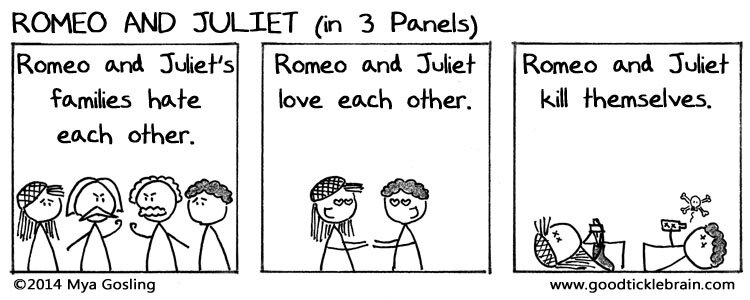
Romeo and Juliet in three panels … see more here
His works have been performed all over the world, and not just in English speaking countries … they’ve been translated into many different languages – including Kyrgyz, as well as made into films and used as the basis for operas and ballets, comic books and paintings.
I remember being in one former Communist country – I won’t say which, but I will say that it wasn’t Kyrgyzstan – and taking a guided tour of the local Historical Museum, when the guide stopped in front of a portrait of the country’s most renowned poet … and took great pride in telling us how the poet had translated many of the great works of world literature, including the plays of Shakespeare … “indeed,” he informed us, “many experts say that his translations were even better than the original!”
Hmmmmm … no comment!
The local drama companies here in Kyrgyzstan do stage performances of the plays as part of their repertoire. I remember, for example, one occasion when I was walking past the Kyrgyz Drama Theater and seeing a poster for Romeo and Juliet and thinking that I would like to see that, even though it was in Kyrgyz – only to be disappointed because the date had already passed. The fact that I wouldn’t understand a word – apart from, perhaps, words like Romeo and Juliet, Capulet and Montague … but knowing the play I thought it would be interesting to see how it was interpreted here.
On another occasion I was walking past the Russian Drama Theater and saw a hoarding advertising a performance of Romeo and Juliette 2 - and, no, it wasn’t a mistake … it’s a sequel written by a Russian playwright, (based on an earlier one by the Russian playwright Grigory Gorin called “A plague on both your houses”). It’s a tragic comedy which follows the Montague and Capulet families following the events outline by the bard in his masterpiece. If you thought the two families might be reconciled following the deaths of the star crossed lovers, the author of this piece doesn’t agree. The families have been long nurturing enmity for each other and he sees this continuing despite the Duke of Verona tasking them to find a couple to unite them in marriage.
Last month saw an interesting evening here in Bishkek – a student festival held at the Balasagyn Kyrgyz National University and dedicated to the works of the Bard, to commemorate the 450th anniversary of his birth. It was held on March 27th – a little early for the anniversary – today – but there was a good reason for that … it was one of the events to mark World Theater Day.
As it happens, I don’t think it matters that it was a little early … we don’t really know when William was born. We know that he was baptized on 26th April, 1564, and working back three days – apparently, it was the custom at that time to baptize an infant at three days old – the generally held opinion is that he was probably born on 23rd April.
.
So … Happy Birthday William … especially from all your fans here in Kyrgyzstan!



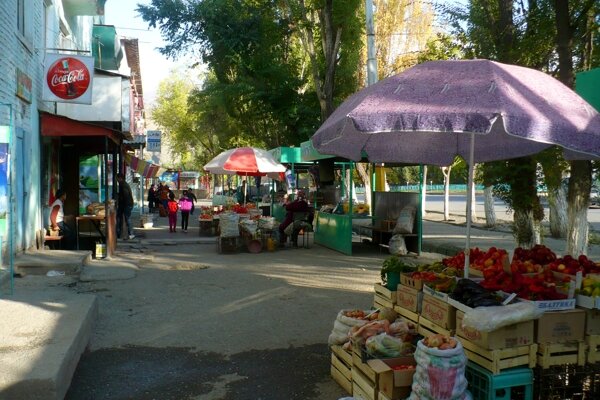


 Bishkek