Youth Travel

Logo of the WFDY
Of all the special (professional) Holidays that Kyrgyzstan commemorates, today is a little special … apparently it’s World Youth Day.
That might seem a bit confusing to those who thought that it was supposed to be in August, (on August 12th to be precise), but that’s because it’s a different “World Youth Day”. The one in August is actually called International Youth Day and was designated as such by the United Nations in 1999 as a day to draw attention to the cultural and legal issues facing young people in the modern world. Concerts, workshops, cultural events, and meetings involving national and local government officials and youth organizations are organized all around the world in honor of International Youth Day.
Today’s World Youth Day dates back the end of the Second World War and the foundation of the World Federation of Democratic Youth, (WFDY), which took place at the World Youth Conference held in London and which brought together representatives of over 30 million young people from 63 different nationalities. It held its final session on 10th November, 1945 – and hence the choice of this date for World Youth Day.
Since then, the international association of youth organizations – the basis of the international democratic youth movement, brings together the youth of the world, without distinction of political and religious beliefs, race or ethnicity. WFDY strives for peace, youth rights, the independence of nations, international solidarity of the progressive youth against colonialism, neo-colonialism, fascism and racism.
The London conference was followed by one in Prague two years later, attended by 17000 delegates. There have been seventeen such festivals, (the last was in South Africa in 2010), and most, but not all – particularly in the early days, were held in socialist countries in Europe.
When the USSR and the Eastern Bloc collapsed in 1991, the WFDY entered a crisis. With the power vacuum left by the collapse of the most important member organization, the Soviet Komsomol, there were conflicting views of the future character of the organization; some wanted a more apolitical structure, whereas others were more inclined to an openly leftist federation. The WFDY, however, has survived this crisis, and is today an active international youth organization which holds regular activities – more details are available on their webpage, with their headquarters in Budapest, Hungary.
As far as I can tell … today’s World Youth Day, although technically an “international Day”, is only formally recognized at the government level, (by a government resolution passed on 14th January, 2002), here in the Kyrgyz Republic.
For the record: To further confuse matters there is another occasion known as World Youth Day, instituted by the Pope Jean Paul II in 1984 – although the first celebration was not held until Palm Sunday in 1986. Each year, the dioceses of the Catholic Church organize events to commemorate the day and then every few years (at first every two years but, since 2002, once every three years), a large international event is organized somewhere around the world; the first, for example -in 1987, was held in Argentina and the latest, (in December this year), in Rio de Janeiro in Brazil – or, (according to Wikipedia), in Quito, Ecuador. The next, in 2016, will take place in Krakow, Poland. The dates of this World Youth Day change every year.
Anyway, it seemed an appropriate moment to take a look at the advice for youth travelers that we put together in response to a question:
A lot of young people visit Kyrgyzstan every year. Many are students spending their long summer vacation travelling the region. There are rarely problems, but to ensure a safe journey, you should:
- Get Insurance. Make sure it’s comprehensive and covers you for medical and repatriation costs as all the activities you are likely to undertake: horse riding, rafting, skiing, paragliding, cycling, … etc,
-
Be informed:
- Check the travel advice issued by your own government.
- Have Local Knowledge. Read up on local laws and customs to avoid offending people or breaking local laws, however unwittingly.
- Check Visas. Ensure you have the correct visas.
- Be Health Aware. Check out what inoculations and health care you need with your GP at least six weeks before you plan to depart. (If you’re going to have sex, remember to stock up on condoms before you go and don’t take any risks with unprotected sex, no matter how appealing it might seem at the time.)
- Avoid Drugs. When it comes to drugs, be aware of the consequences. Using drugs is ilegal and carries heavy penalties – there will be no concessions granted to you as being a foreign citizen.
- Be Careful with Alcohol. If you are going to drink alcohol, know your limit. Accidents are more likely after using alcohol (or drugs) and as well as the potential hangover and embarrassment, you’re unlikely to be covered by your insurance. (Also, be aware that drugs are sometimes used in rape and once added to a drink they cannot normally be detected, so try to keep your drink with you at all times.)
- Be Vigilant. Stay aware of what is going on around you and keep away from situations with which you do not feel comfortable.
- Take Care of your Belongings. Keep an eye on your belongings and lock valuables away. Be careful when you’re out and about – the beach, the market and crowded streets are favourite places to catch you unawares. Make copies of your tickets, passport, insurance policy (plus 24-hour emergency number), itinerary and contact details and leave one at home – just in case.
- Take Enough Money. Your consul cannot send you home for free if you run out, so ensure you have a return ticket, or enough funds to buy one.
- Keep in Touch. Consider taking a roam-enabled mobile phone with you and use e-mail to keep in touch. Leave details of your travel itinerary with your family and friends; tell them of any change of plan.
In the case of “Gap year” placements – many organisations charge a lot of money to arrange gap year placements. Before you sign any documentation or hand over any money, make sure that you have adequately researched the organisation(s) involved.


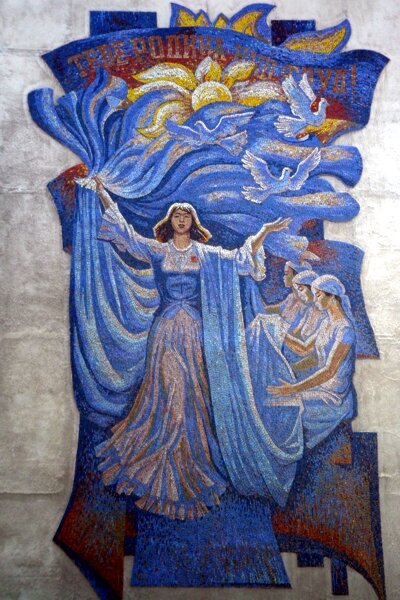


 Bishkek