Saima
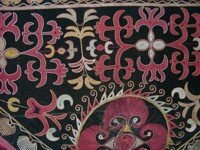
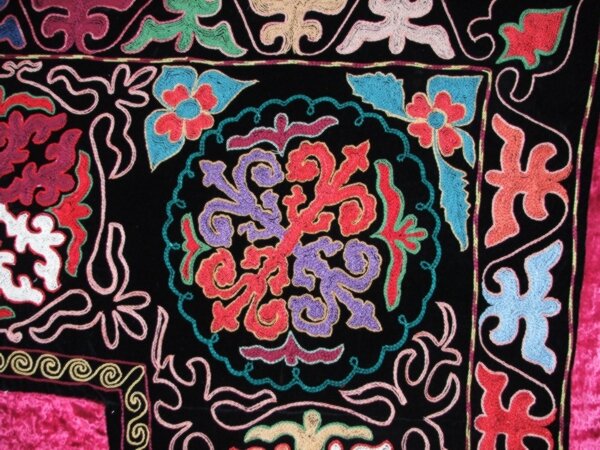
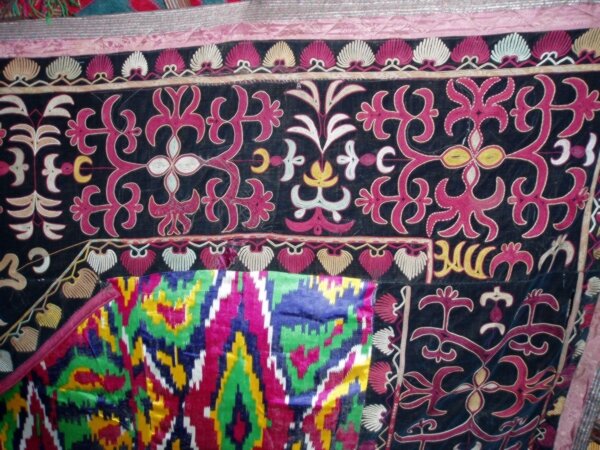
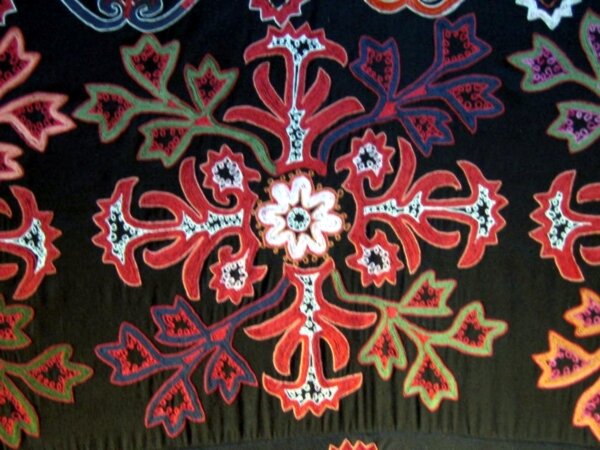
An example of embroidery
Embroidery, saima, was a very popular and widespread craft – practiced by women of all ages – from the very young to the very old – and was more individualistic than some of the other traditional crafts, because it didn’t require a collective effort.
Perhaps the best known examples of saima are Tush Kiyiz, (pronounced “toosh Keeyiz”), which are wall hangings, or wall panels, originally used to decorate yurts and divide them into separate areas. They are to be found all over central Asia where yurts were used – including Kyrgyzstan, Kazakhstan, Mongolia and Upper Xingjian in China.
Many objects lent themselves easily to embroidery – sashes decorating the cupola of the yurt, the cloth covering the doorway of the yurt, bags, horse cloths, and clothing. Head-dresses, in particular, with long flaps were highly decorated. In the twentieth century even covers for radios and television sets were often made and decorated with fancy needlework.
In the north of the country – women would often stretch the material on which they were working over special frames – whereas in the south, the material would be pinned to the woman’s dress stretched over a bent knee and the woman would sew whilst sitting on the floor.
Ornaments made from precious metals, corals on other materials would often be incorporated into the pattern.
A variety of stitches were used – chain, tambour, whip, satin and buttonhole – but please don’t ask me to explain the difference … it is better to look at several examples and see for yourselves.
Some of the museums throughout the country have examples of embroidery – but very little dating from before about the 1880’s has been preserved. It is also difficult to find new examples of saima, especially hand sewn items, as it is a very intensive and skilled craft which is not as popular among the youth as it used to be among previous generations.
In fact many of the older tush kiyiz are folded and made into containers for clothes and other items – such cloth cupboards being also hung on walls – these are known as “tegche” (though tegche are not only made from tush kiyiz and many different types are found. Some of these tegche lost their functional use as bags and became purely ornamental).
Here are some photo galleries to give an idea of some of the details and the hard work involved in creating these works of applied art:
.
Tush Kyiyz
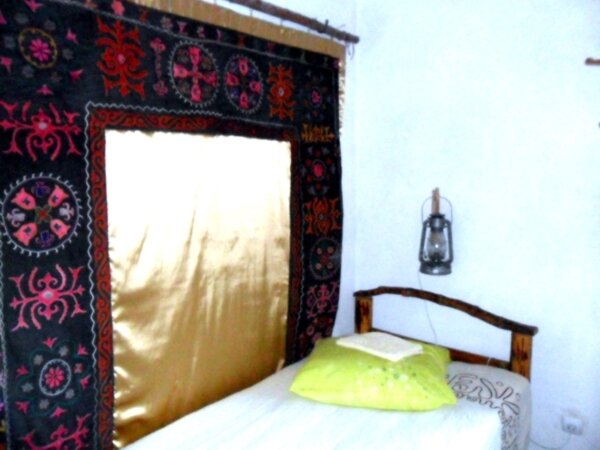
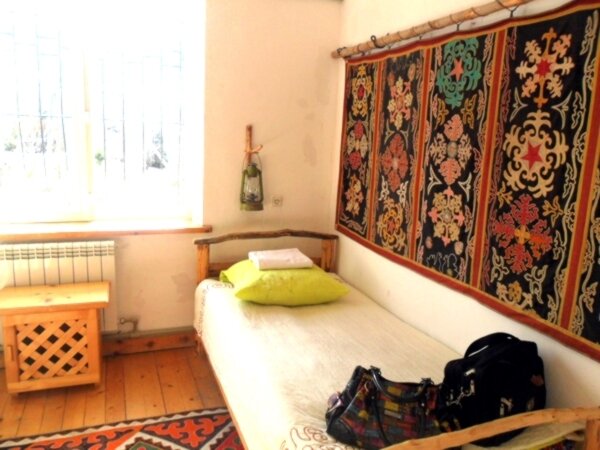

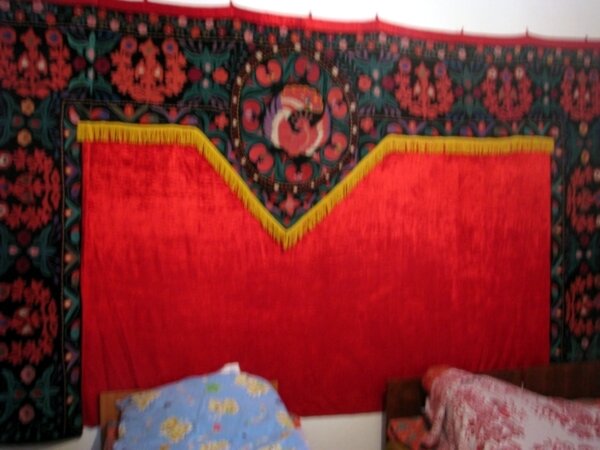
.
Embroidered objects


.
Details








 Bishkek