An interview by email
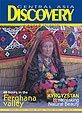
One of our partners, is “Silk Road Media”, a publishing house established by Marat Akhmedjanov, an Uzbek citizen, who is based in London. I actually consider them to be one of our most important partners … Why?, well, because one of the most valuable commodities in the modern world is information, especially about a new and largely unknown destination such as Kyrgyzstan. Silk Road Media helps to disseminate information about Central Asia in general – and Kyrgyzstan in particular – around the world.


|
|

|
|
|
|
|
|
|
|
|
|
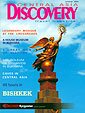
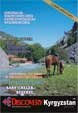
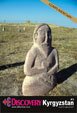
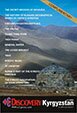
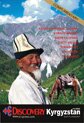
They first came to us with a proposal to advertise in their magazine Discovery Central Asia… and to be honest, at that time I wasn’t very keen, especially as the content was predominantly about Uzbekistan. The editorial team, however, were keen to expand their coverage of the rest of Central Asia, so that magazine lived up to it’s name – and we agreed to supply some materials on Kyrgyzstan. We still continue to contribute and work closely with the editors.
The magazine was well received and so successful that it was decided to issue special, complimentary, supplements on each country – Kyrgyzstan providing the pilot which was quickly followed by other “supplements” devoted to Kazakhstan, Uzbekistan and Tajikistan. The supplements also spun off into separate magazines – which are available in a number of outlets, (such as through hotels, airports, shops, tour companies …) at exhibitions and through embassies. These in turn evolved into country specific, “travel guides”.
I wrote the original for the Discovery Travel Guide to Kyrgyzstan, in English, which has now been translated into German, Japanese and Russian … and a French version is in preparation.
Their latest project is a quarterly magazine called Open Central Asia. It is published in the UK and aims to connect and highlight the links between Europe, (mainly the UK), and Central Asia. It promotes the cultures, politics, events and communities of both regions and to open a discussion and exchange of ideas between them; to promote both business co-operation and tourism opportunities. Currently it is distributed in 6 countries, (the UK, Uzbekistan, Kazakhstan, Kyrgyzstan, Tajikistan and Turkmenistan), and among over 1000 business companies through British-Uzbek and British-Kazakh Societies, American Chamber of Commerce in Tajikistan, Uzbekistan, Kyrgyzstan and Kazakhstan. Copies of the magazines are also available at several Universities, Embassies, through Airlines and other organizations in the UK related to Central Asia. Basically it is distributed free of charge, although for individual subscriptions there is a subscription fee to cover the cost of delivery, postage and packaging.
For their first edition, they asked me to do an interview about my experiences here in Kyrgyzstan, which I was happy to agree to do.
When the Easter Revolution occurred on April 7th, Marat happened to be in Bishkek. As it happens, I was having lunch with Marat that day when everything “happened”.
The Silk Road Media office in Bishkek didn’t fare as well as we did during the rioting and looting. It was in one of the government buildings and was gutted. All of their equipment, (computers, etc.) was stolen along with a lot of stock, (books and magazines etc.), and what wasn’t taken away was damaged to the extent of being unusable.
|
|
|
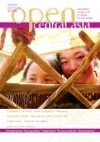
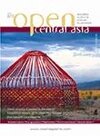
For the next issue of Open Central Asia, they decided that they needed to include some articles about what what had happened, and they asked if I would be willing to contribute one … or perhaps do an interview. I had no problem agreeing to this and we agreed to use these postcards as a basis for the “interview”, which was going to have to be conducted by email as we are separated by something like 8000 kilometers.
I also said that I needed to make the following clarifications:
- The postcards are my personal observations, on the spot and at a given time … the situation was changing almost from moment to moment and, although the “rate of change” has slowed down, there is still a certain amount of uncertainty in the air. Others had different experiences and have reported different impressions … I can’t argue with their experiences and impressions, but these comments arise from what I experienced and how I judged those experiences.
- It wasn’t that bad! It was bad. It was unpleasant. The deaths were tragic. On the other hand it could have much, much worse. And, let’s face it, we in the West don’t have a clear history in this respect … there’s no need to go back to the likes of the Battle of Bosworth (Henry VII had one of the weakest claims to the British throne ever), or Peterloo, just in my lifetime … I don’t remember the Notting Hill Race riots, but I do remember Wood Green, Luton … Los Angeles 1968 and 1992, Kent State University (the anniversary was yesterday, May 4th) … The Anti Nazi League/National Front clashes (Blair Peach inquiry has been in the news again recently, hasn’t it), The Anti hunting Law protests … The IRA bombing campaigns, 07/07 … and so on. They may not have led to the overthrow of a government, but they share a common history of protest … and there were a number of deaths involved in many of them.We got away with a relatively short, but “bloody”, (costly in terms of lives lost), turmoil. It could have been much, much worse.
- We may well be part of a “global village but, basically, it looks like it was a predominantly internal affair … protests against a national leader and his government and “cronies” … it looks to me like Kyrgyz citizens putting their own house into order, albeit “with a little help from my friends”, (to quote the Beatles).
- It’s hard to say that things are “back to normal” … how can they be “normal” after that sort of event?, especially so soon after the event. After the death of a loved one, the funeral, memorial service, requiem mass, etc. are all designed to help the living come to terms with their loss and get on with the rest of their lives. Life goes on, but people have to adjust to their new, changed circumstances. That’s what is happening here.As examples of how things are “normalising” I can point to the fact that various donor agencies have agreed to extend, and even expand, their projects in the country and that some governments, (notably, of course, the British), have downgraded their travel warnings so that they no longer advise “against all but essential travel to Kyrgyzstan”.


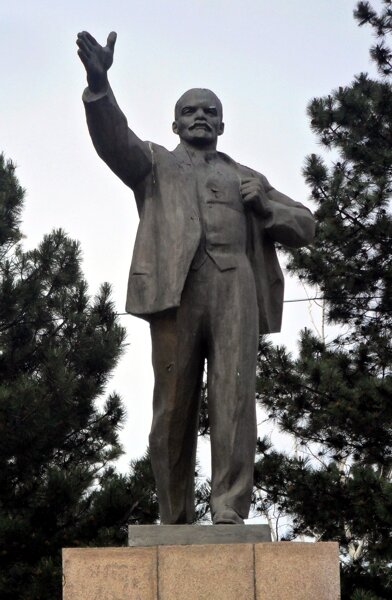


 Bishkek