Why do we need a law On Tourism?
Last year, 2009, those of us working in Tourism spent a lot of time lobbying the powers that be about a new draft law “On Tourism“.
It all began with a quiet announcement in the press to the effect that a new draft law “On Tourism” had passed its first reading in the Jogorku Kenesh, (the Kyrgyz Parliament), and would then proceed to the committee stage where it would be considered in detail, before receiving it’s second reading and final approval. This announcement caught us all by surprise as it was the first that most of us, (if not all of us), had heard of such a measure. When we finally obtained copies of the document and began to read it, we were so taken aback that we were galvanized into action which resulted in a summer of lobbying, of meetings and drafts.
It proved to be an interesting exercise which distracted us from our main business – that of organizing and running tours so that people could visit and experience Kyrgyzstan: the magnificent scenery, the varied wildlife, the sense of history pervading various locations, the diverse culture of the eighty odd nationalities that call Kyrgyzstan “home” and in particular the traditional nomadic lifestyle and culture of the Kyrgyz.
The draft law began with four pages of definitions of terms like “tour”, “tourist”, “tour services”, “tour activities”, “tour product”, “destination” and “guide”. There was even a definition of “timesharing”, although the term was never actually used in the main body of the text. The draft then went on to outline a system of state regulation of the industry, and as a result the introduction of a number of measures, many of which I was tempted to call “draconian” … because they seemed to have the sole intention of increasing control over the industry, such as: new forms of registration, (basically, a form of licensing, although the use of the word itself was studiously avoided); compulsory insurance; the form of contracts with clients; obligations concerning accounting and statistical reporting and specific educational and training requirements for those working in the industry.
To be fair, many of the stated aims of the draft law were laudable, such as:
- The development of tourism as priority branch of the economy of the republic;
- The maintenance of the rights and freedom of the citizens of the Kyrgyz Republic in the sphere of tourism by means of creation of a modern, highly effective and competitive tourist industry, capable to satisfy the needs of citizens for various and qualitative services.
- The observance of the conventional principles and norms of international law and the obligations following from entering international contracts and agreements by the Kyrgyz Republic.
Who can argue, for example, about the need for well qualified guides – especially in the case, for example, of mountaineering expeditions which requires specialist and expert knowledge.
However, there were many aspects of the draft law which were of concern to those of us working in the industry. Hence the spurt of activity as we entered into discussions with the authorities in an attempt to eliminate some of the more worrying aspects. To cite just a few examples:
- The draft contained, for example, provision of a register of all subjects of the tourism industry: tour companies, hotels, guides, transport companies, etc. However, there are already requirements for registering companies … with the Ministry of Justice (or equivalent body), the tax authorities, the Social Fund and Statistical Committee ,so why was it considered necessary to implement a new form of registration for those working in tourism? …
- The draft law went on to specify the contents of contracts between those working in tourism, both with clients and with each other … but why? The Civil Code already has provisions outlining the requirements for contracts. What was special about tourism that required additional provisions? Why aren’t other commercial contracts also subject to similar additional provisions? Why were “tour vouchers” being made compulsory – and subject to “strict accounting”, (a term which is not defined anywhere in Kyrgyz law, at least as far as I can see).
- There were clauses in the draft law that sought to regulate who could work in the tourism industry and the most notorious provision forbade having someone who was not a Kyrgyz citizen as the the Director of a tour company.
- There were provisions for imposing a system of compulsory insurance for tour operators. Now, personally, I am in favour of insurance and I can see the point in requiring commercial enterprises, (tour operators, hotels, etc.), to have insurance cover for Public and Product liability and Employers liability. Indeed, we, ourselves, do have such policies, (all of which adds to our costs and, therefore to our prices, so introducing a requirement for compulsory insurance would be beneficial – to both the client and to us as a company.) However, it seems to me, at least, that there should be a general requirement for all companies to have such polices rather than just for those working in tourism.
|
Our campaign began by asking why the new draft law was needed … there is already an existing law “On Tourism” on the statute book, which dates from 1999, (and has been amended once, in 2003). I am not sure what legislation existed before then because I can’t find any other similar laws dating from the Soviet Period in the legal database that I use. In the eleven years since that law was adopted there have been at least three attempts to introduce more stringent drafts.
The first was in the “Year of the support and Development of Tourism” in 2001. A second was based on the law “On Tourism” of the Russian Federation. The Deputy, (member of Parliament), who proposed it simply removed most of the references to Russia and the Russian Federation, replacing them with Kyrgyzstan, the Kyrgyz Republic and Kyrgyz, as appropriate. I say “most” because unfortunately they missed some, which “gave the game away”. It seemed odd that after several years of independence Kyrgyz laws were still being drafted in Moscow, and that the considerable differences between the situation in Russia and that in Kyrgyzstan were not taken into account. This new draft was supposed to be based on a Model Law which had been drafted for member states of the Commonwealth of Independent States, but as we perused the two texts we found a number of important differences between them.
As it happens, the Deputies insisted that a new law was needed to meet the changed circumstances since the original law had been adopted, both globally and internally in Kyrgyzstan. They also claimed that the existing law was mainly “declarative” and there was a need for a law that would be more “regulatory”. They also pointed out that, as the Bill had passed it’s first reading in the Parliament, it couldn’t just be dropped – it was necessary to reach some conclusion.
So, having “lost” that part of the argument, we switched to a tactic of explaining where there were problems or deficiencies in the draft law; such as where it contradicted provisions in other Kyrgyz legislation. It was a long and hard process. To be fair, the deputies were ready and willing to listen to and address our concerns, they were receptive to receiving comment and suggestions. According to one of the Deputies involved, there were over a hundred meetings to consider different aspects of the draft. There was also a large amount of public debate on the various issues in the press. On the whole, however, we were not successful in mitigating or eliminating all of the issues that concerned us, and the law eventually passed it’s second reading in a modified, but, (in our opinion), a form that was still far from satisfactory.
The next stage was of the legislative process was for the Bill to be passed to the President for signature after which it would come into force. Now the President is not obliged to sign every Bill into law that he receives from the Parliament. He does have a veto which he does use on occasion and he decided to use his veto on this particular occasion, saying that the Bill had not passed a satisfactory Regulation Impact Analysis. He referred the matter back to the Parliament for further consideration and so we have come “full circle” and are now being asked to comment on it all over again so that a new “improved” version can be presented to the Parliament.
All of this has led me to ask myself a simple question: “Why do we need a new law “On Tourism”?”: why do we need a special law “On Tourism”, anyway? What is so special about Tourism that it merits a law to itself?
It is true that certain commercial activities may well require specific legislation to regulate them in order to protect the public, (such as the operation of banks, security firms and so forth), but I am not sure that tourism falls into this category. There are no special laws in Kyrgyzstan, for example, about the operation of shops, or restaurants. There are, however, a host of general laws and regulations covering normal business activity, Consumer Protection, Health and Safety and so on. For example, hotels and resorts, cafes and restaurants are already subject to various sanitary regulations, fire regulations and so forth, so I ask myself, why was it thought necessary to introduce in the new draft law a new form of compulsory certification which would simply duplicate these provisions. Surely, it seemed to me, it would be better to ensure that these regulations were properly applied and enforced rather than introduce a new level of bureaucracy.
I am not sure that I know the answer to my question. I do know that there are several countries that do have specific laws about tourism, but there are also many that don’t. The industry in Turkey and Israel, for example, is very strictly regulated whereas in Britain and the Netherlands the regime governing the industry is much more loose and relaxed.
In fact, the World Tourism Organization (UNWTO) has an extensive database of legislation – LEXTOUR – but according to them only a third of the three hundred systems currently identified, in some 130 countries, focus exclusively on legislation relating to tourism. Looking at the data on the system, it seems to me that these laws and regulations full generally into two different categories:
- General legislation such as tax legislation, environment and consumer protection, which are applied to all industries including tourism , and
- Legislation covering specific topics such as establishing a Tourism Promotion Board; the establishment of special Tourism Economic Zones, (for example in Russia); Planning, such as specific Tourism Development Plans; Regulations covering “Compliance and Risk Management” which cover security, health and safety, planning and social and environmental concerns; Codes of conduct and accreditation schemes, such as Hotel classification; bilateral, multilateral and regional international agreements, for example on visa recognition or about human trafficking and child sexual exploitation; on qualifications and training, and so on.
This seems to me a sensible way of doing things: general legislation to cover general topics that affect all businesses, then specific legislative acts, (they are called normative acts here), to cover specific issues that arise, rather than to try and create all embracing laws to govern a particular sector of industry.
To take an example of a specific topic, that of the provision in the draft law requiring compulsory insurance for tour operators, then, (as I have already commented), it seems to me that this is a good idea but that there should be a general requirement for all companies to have Public, Product and Employer’s liability polices rather than just imposing this on those who are working in one sector of the economy. Even if it was thought especially important to have legislation in place requiring special insurance arrangements for Tour Operators, (or Bonds to protect clients funds), then a separate piece of legislation could be enacted to provide for this.
I wonder to what extent it is simply a tendency of trying to “put the clock back” to a time when everything was tightly controlled and regulated under a “central command economy”, when everything was illegal unless it was explicitly permitted rather than everything being legal unless it was specifically prohibited.


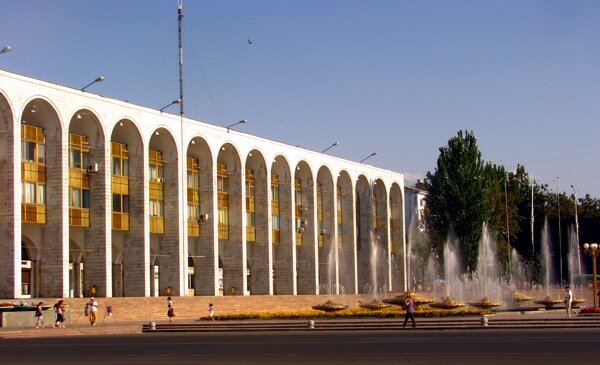


 Bishkek