Roza Otunbaeva
Roza Isakovna OTUNBAEVA was born in 1950 in Osh, in what was then the Kyrgyz Socialist Soviet Republic, one of the constituent republics of the USSR.
She graduated from the Moscow State University in 1972 and her career has involved periods as a lecturer in the Kyrgyz State University, secretary of the Frunze City Committee of the Communist Party, Minister for Foreign Affairs and deputy chairman of the Council of Ministers for the Kyrgyz SSR, a period in Moscow in the Ministry of Foreign Affairs of the USSR, as a Soviet representative to UNESCO and Ambassador of the USSR to Malaysia.
In 1992, she returned to a newly independent Kyrgyzstan, and was appointed Vice Prime Minister and Minister of Foreign Affairs for the new republic. This was followed by a period as Ambassador to the United States, another period as Minister for Foreign Affairs, then as Ambassador to the United Kingdom – after which she took a post in the United Nations Observer Mission in Georgia.
She played a key role in developing relationships between the new Republic and the West – especially with the United States and Great Britain – and contributed greatly to the image of the country as an “island of democracy” in Central Asia. She had a high profile in diplomatic circles, and was well respected in the West. She is considered as a moderate in political terms.
There were disagreements with the government, however, and in 2005, when she tried to stand for the Ata Kurt (or “Fatherland”) party in the elections to the Jogorku Kenesh, (parliament), she found that he path was barred by a legal requirement that candidates had to have lived within the republic for five years. Because of her service abroad, she did not qualify. It just so happened that President Akaev’s daughter was standing in the same constituency and there was speculation about the commission’s refusal to accept her as a candidate on a “technicality”. It couldn’t have helped that she was on record as saying: “We will not allow anybody to build a monarchic dynasty in our civilised republic”, which amounted as an open challenge to Akaev and his family. Protests were held in her support – and the legal establishment appeared to waiver in its opinion.
She was not successful, however, although she remained a key figure in the opposition, which was gathering strength.
Following the “Tulip Revolution” in March 2005, she was appointed (once more) as Minister of Foreign Affairs. However, her appointment was not confirmed by the parliament and so she returned to the political arena, unsuccesfully contesting a parliamentary by-election.
For a while she was co-chairman of the Asaba (Flag) party, and in 2007, she was finally elected to the parliament as a deputy for the Social Democratic Party, which she subsequently went on to lead.
She became more and more critical of the Bakiev regime which she criticised for continuing the abuses of the previous Akaev one. In early 2010 she complained to a Russian news agency that: “They stole our revolution”.
In April 2010, street protests against the incumbent President Bakiev and these were met with violence: the use of batons, tear gas, stun grenades and finally sniper fire. In all eighty five people died as a result of the events that day. President Bakiev fled the White House, which was stormed by the crowd, to his home village in Djalal Abad oblast.
Roza Otunbaeva was selected by the leaders of the parties who had opposed Bakiev to be the Head of a temporary administration, (interim government, or provisional government), to fill the vacuum left by his flight. The other’s became her deputies and were given portfolios, or responsibilities, to reflect their particular expertise or experience.
She is proud of her Kyrgyz origins and culture, and has done much to support the development of traditional crafts, especially in her role as Ambassador to both the US and Britain.
She is married, with two children, one son and a daughter.




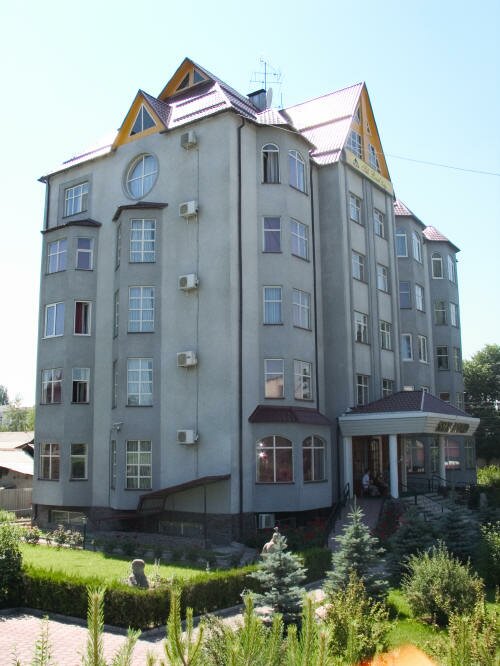

 Bishkek