The strange case of the Matrushka doll

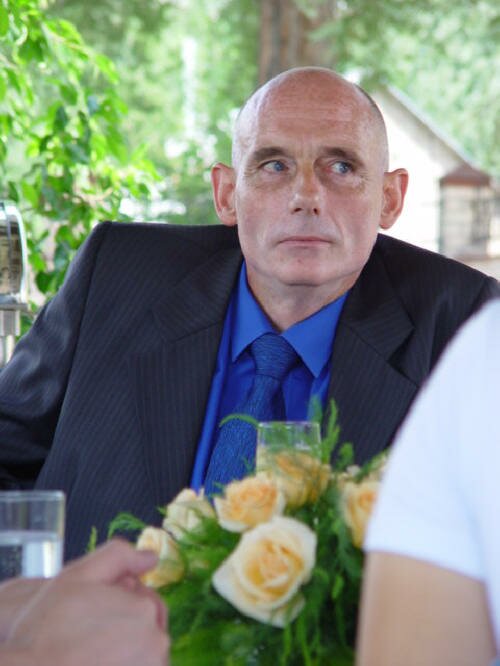
Photo from: Wikipedia
The curious case of the Matrushka Doll may seem like a plot from a James Bond movie, but it had serious implications for, and almost led to the downfall of, the fledgling government following the Tulip Revolution.
Following the sudden and unexpected change of power in Kyrgyzstan on March 24, 2005, a split occurred in the victorious camp on the country’s further development. One of the points of discord was the question of urgent need for constitutional reforms. which were advocated by various groups, deputies of the Jogorku Kenesh and political parties. It was argued that such a reform should review the Constitution in order to strengthen the checks and balances between the branches of power, the lack of which, in the view of the opposition, had led to the restoration of an authoritarian regime, and what is often termed “family” management of the country – simply replacing the Akaev family with the Bakiev family.
A Constitutional Council, headed by the President, (ex officio) worked on preparing a new version of the constitution, but there were delays in reaching conclusions for recommending to the nation. The opposition alleged that the President had been delaying and disrupting the work of the Constitutional Council due to a lack of will to follow through with constitutional reforms. In autumn 2005, the President published a version of his own of possible constitutional amendments. It was considered to include only cosmetic amendments to Akayev’s Constitution, thus increasing the opposition’s suspicions. Later on, under pressure from the opposition, he disavowed this version and in January 2006 issued a decree on preparation for a referendum on constitutional changes, and its conduct before the end of 2006.
A number of political parties and civil society organizations united into a coalition that came to be called “For Reforms”. The opposition politician, Omurbek Tekebaev, ex-speaker of the Jogorku Kenesh and chairman of the Ata Meken party, became its co-chairman. Tekebayev was well-known throughout the country, having been elected to Parliament four times. He ran for President twice, in 1995 and 2000, coming second in 2000 officially receiving about 15 percent of the vote. After the events of March 24, he was elected Toraga, Speaker of Parliament, and carried out a policy independent from the President. His harsh statements addressed to the President led to renewed political crisis, and his resignation as Speaker.
In April and June 2006, the “For Reforms” movement held mass meetings in Bishkek demanding political reforms and, in the event that these demands were not met, threatened further large demonstrations to demand the dismissal of the Bakiev-Kulov tandem.
Then, in September, during a visit to Poland to attend an Economic Forum, Tekebaev was arrested at Warsaw airport accused of drug trafficking, following information received from the Kazakh Interpol center that a group of alleged activists of the banned Hizb-ut-Tahrir movement had traveled from Istanbul to Warsaw with narcotics, and could have Kyrgyz, Uzbek or Kazakh passports. Among those named was Omurbek Tekebaev.
The Warsaw district court, having examined the “Tekebaev case”, passed a verdict of not guilty and presented its apologies to the Kyrgyz politician. Meanwhile in Kyrgyzstan, a special Parliamentary commission was established which was presented evidence, (including security video from Manas airport), that a special operation was carried out against Tekebaev in the airport as a result of which a matrushka doll with heroin was discovered in his luggage. Early in the investigation, two officials voluntarily resigned: the Chairman of the National Security Service, and his first deputy, (Janysh Bakiev - the President’s brother).
During the investigation, deputies started demanding the resignation of both the President and Government. President Bakiev came personally to the Parliament, where he provided explanations and promised to investigate objectively the incident, and to punish everyone guilty irrespective of their posts. Nevertheless, a resolution was adopted that assessed the events harshly and demanded serious punishment of the guilty.
The details of who did what, when, where, how and why, were never discovered – or if they were, they were never publicised.






 Bishkek