A conundrum
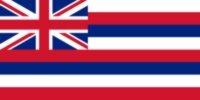
OK - so whose flag is it?
Here is a “trivia” question which I used to try out on my American friends … Which of the 50 states of the US has a Union Jack as part of its State Flag?
I learned fairly early on that I rephrase the question because people asked me to explain, “What’s a Union Jack?” … it’s the flag of the United Kingdom … so the question I ask now is “Which of the 50 states of the US incorporates the British flag?”.
OK – the word incorporates sometimes causes a problem … but most people at least understand the question … however only a few ever know the right answer … and those that don’t start floundering trying to guess.
The most amusing answer I get is, “New England”; New England is a region in the northeastern corner of the United States - it is not a state in itself – consisting of the six states: Maine, New Hampshire, Vermont, Massachusetts, Rhode Island, and Connecticut. Having pointed that I out, most people guess one of those six … or perhaps one of the other of the original thirteen colonies.
In a way that is not all that surprising. The first standard raised by the Continental Army in rebellion against British authority also contained a Union Jack – in the top left hand corner – with thirteen alternating red and white stripes to represent the individual colonies … but that was soon replaced by the stars and stripe pattern which eventually evolved into the flag with which we are all familiar today.
The answer to the conundrum comes from the other side of the country – and the last state to join the Union, on 21st August, 1959: Hawaii.
In fact the Ka Hae Hawaii, (the official name for the flag), predates the territory becoming a state, having been adopted in December 1845 by King Kamehameha I - who had united the islands with the help of foreign weapons and advisors in 1810. It was based on earlier versions dating back as far as 1816 – and has been used as a national symbol almost continuously since then – with a three month gap in 1893 when the Kingdom was overthrown – by the kingdom, protectorate, republic, and territory of Hawaii as well as the state.
It’s not known who designed the original flag, but it was probably a former Royal Navy Officer, who was at that time serving in the Royal Hawaiin Navy. It is probably based on a Red Ensign, (a flag used by the British Navy at the time although it is now used by British Merchant vessels), and the flag of the British East India Company. The Union Jack represents the connections of the Kingdom with the British Empire and the eight horizontal stripes, (of alternate white, red and blue), which apparently symbolize the eight major islands (Hawaii, Oahu, Kauai, Kahoolawe, Lānai, Maui, Molokai and Niihau).
For the record – the British connection: Although it is thought that some other Europeans may have sighted and landed on the islands beforehand, the first such visit actually recorded was that of Captain James Cook and his crew – who were attempting to discover a “North West Passage” between the the Atlantic and the Pacific. In what today seems like an act of arrogance, he called them the Sandwich Islands after the fourth Earl of Sandwich.
For the record – the stripes: a ninth stripe was once included, apparently representing the island of Nihoa, which although it technically formed part of the kingdom, was in fact uninhabited. Some other, early versions of the flag have only seven stripes.
It is true to say, however, that the flag has not been without some element of controversy because it is seen as reflecting a colonial history of the Islands – comprising at it does symbolic elements of the British and American flags, and alternatives have sometimes been suggested.
Today, July 31st, happens to be Ka Hae Hawaii Day - declared as such by the State Governor back in 1990 and celebrated every year ever since.
As well as being an interesting conundrum, and (worth a few points on a Quiz Evening), it also struck me as interesting that, even though there has been some controversy over it, the same flag has been used for 168 years, through five different types of government … meanwhile …
… during that time, Kyrgyzstan has been:
- a part of the Khanate of Kokand
- a part of the Russian Empire
- a part of the Soviet Union:
-
- part of the Turkestan Autonomous Soviet Socialist Republic
- the Kara-Kyrgyz Autonomous Oblast within the Russian SFSR
- the Kirghiz Autonomous Oblast
- the Kirghiz ASSR
- The Kyrgyz Soviet Socialist Republic
- The Kyrgyz Republic – Kyrgyzstan
Apparently, not all of these had their own flags, but the ones I have been able to track down have included:
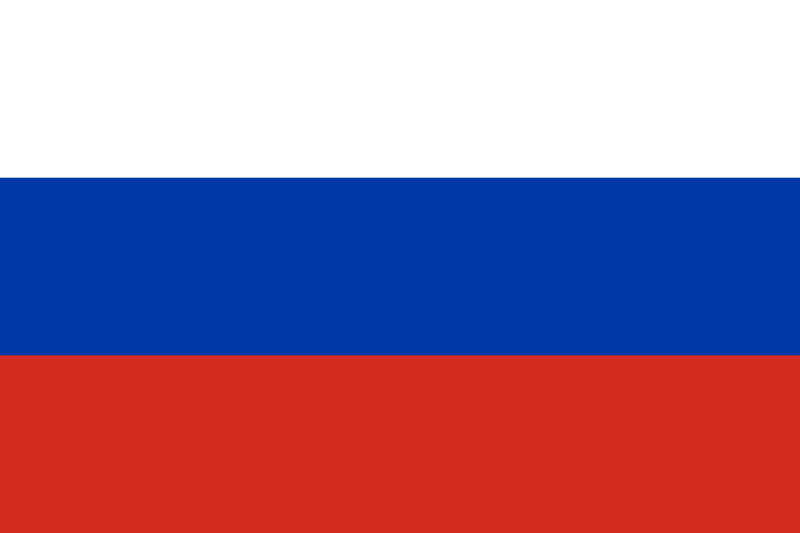


It’s probably understandable that when major political changes take place … when the nature of sovereignty changes such as when when Kyrgyzstan became an independent state – that the vestiges of the old regime are discarded and a new state symbol is adopted (even if the Hawaiians chose not to do so).
The current flag of the Kyrgyz Republic has a red background – the colour represents courage and valour and is supposed to have connections with the battle standard of the legendary hero of the Kyrgyz, Manas – with a yellow sun in the center with 40 flaming rays representing the 40 Kyrgyz tribes; on the obverse side the rays run counter clockwise, on the reverse, clockwise; in the center of the sun is a red ring crossed by two sets of three lines, a stylized representation of the tunduk of the traditional Kyrgyz yurt.
In recent times, however, there has been considerable discussion here in Kyrgyzstan about the need to revise the state symbols, (including the flag).
Apparently the adoption of the current flag in 1992 was not without some controversy … and it, it seems, this still rankles in some quarters.
For some time after Independence, the country retained the use of the flag adopted by the Kyrgyz SSR. It established a special commission to consider the design of a new flag for the country and in the winter of 1991/2 the commissions proposals were submitted to the parliament. The plan was to adopt a new flag before entry into the United Nations, (i.e. before 1 March 1992).
The final version was similar to the current flag, only with a blue background.
Blue was the color of Manas’ flag and, according to scholars, symbolized a blue sky during peaceful times. Blue was also considered the color of the “right wing” (or group) of the Kyrgyz tribes ….
White, used in some of the designs, is meant to symbolize fairness, honesty, generosity and cleanness – and was considered to be the color of the “left wing” of the Kyrgyz tribes.
Red represents courage and valour and is supposed to have connections with the battle standard of the legendary hero of the Kyrgyz, Manas and was considered the color of the Ichkilik “group” of tribes. During the debate, however, some people suggested that if was simply a “hangover” from the color of the Soviet flag – although it is a different hue of red.
However, design of the flag was “painful and full of intrigues”. One parliamentarian in particular expressed dissatisfaction criticized the composition of the commission that had overseen the design process … noting the absence of representatives from certain groupings of Kyrgyz among the members. He mobilized a group of parliamentarians from the south, saying the blue is the colour of mourning in some parts of southern Kyrgyzstan … and was therefore inappropriate for the emblem of the new state.
In answer to the discontent, someone pointed out the lines of the Manas epic, which reads that Manas led his troops under the banner of a red color – and Blue became Red.
All this happened “at the eleventh hour” on “the floor of the house” …
In 2011 the commission established to consider the issue received some 33 designs, (including some that had apparently been rejected in 1992), and these were main contenders:
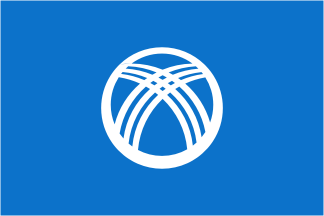


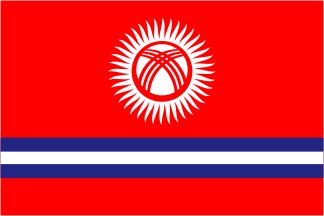
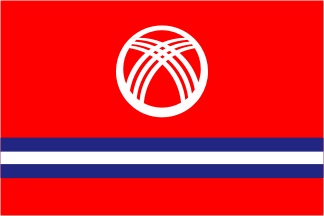
Interestingly … they all retain the image of the Tuunduk, although there are variations in terms of colouring, the the presence of absence of the sunburst and two have links back to the 1957 flag of the Kyrgyz SSR.
.





 Bishkek
I’m afraid, 40 flaming rays on flag of the Kyrgyz Republic don’t represent tribes, but Manas’ 40 reliable soldiers.
Thank you … I stand corrected