Buying a package
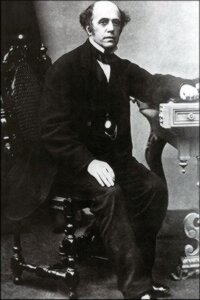
Thomas Cook ... father of the "package tour"
Today marks the anniversary of the first ever “package tour” – on 5th July, 1841.
It was offered by a certain Thomas Cook. The 33 year old cabinet maker, Baptist preacher and Temperance activist organized a special train excursion for 540 fellow Temperance workers to attend a rally in neighbouring Loughborough – eleven miles away. He negotiated a special price with the railway company, including food for the journey, from which he received a commission. Although this was not the first “chartered train service”, it was the first to be offered to the general public.
This was followed by several other trips and then the railway agreed to enter a general agreement formalizing the arrangement. He started organizing further afield – to Scotland Apparently, however, he wasn’t exactly a commercial “whizzkid” and ended up going bankrupt. Fortunately, this didn’t deter him and his persistence paid off and he arranged packages for people to attend the Great Exhibition in London and later to Paris, Switzerland and beyond … Italy, Egypt and the United States.
He set up a company with his son and Thomas Cook and Son Ltd. established itself as a leading tour operator … with offices around the world.
He was responsible for a number of other innovations, such as the Holiday Brochure, Hotel Vouchers and Travellers’ Cheques.
The company that he founded, together with his son, has undergone many changes, facing many challenges – but it is still one of the leaders … and one of the most recognizable names … in the industry.
Now, not everyone wants to take a package tour … many people want to travel independently … I have done both in my time and they both have their relative advantages and disadvantages.
I remember watching a travel programme on TV back in the late 1970′s – or maybe the early 1980′s that looked at one of the issues which, depending on how you look at it, could be considered either as an advantage – or a disadvantage.
Each week the programme presented a report from a couple of destinations – some of the reports given by a members of a small team of “professional” travel journalists employed to work on the whole series,, (i.e. that’s basically all they ever did), and others by guest celebrities. There was also a “news” spot giving information about special deals on offer by different companies, and another for “travel advice” where as well as feedback from viewers.
Needless to say, the programme was very popular and inspired many people to consider holiday destinations that they may never have thought about otherwise.
As time went by, they also developed an investigative and campaigning slot … and today they would probably cover topics like “sustainable tourism”, “responsible tourism”, “sex tourism” and the like. I remember one of those “investigative” reports very well … I can’t remember what it was called – well it was about 30 years ago – but it was all all about “are you getting a fair deal when you book through a travel agent?”
After a brief introduction when the reporter selected several hotels out of published Holiday brochures, he then called the hotels direct and asked about the same type of room that was on offer in the brochure – and discovered that he was offered a totally different price … as it turned out, a much cheaper price. He then went into how the industry worked – block bookings made by travel companies at huge discounts, but then always being able to sell them all … about them having to print the brochures, open offices on Britain’s High Streets, maintain a company representative in the resorts to handle any issues that arise … and so on … oh, and yes … to make a profit.
If I remember correctly, the main thrust of the report wasn’t that the companies were overcharging, but that people could get a better deal by things themselves, doing some research and booking directly.
However, the reporter then went to one of the resort – chosen randomly … or specifically because there appeared to be a substantial markup in the price … and interviewed some of the holiday makers. I remember one interview particularly … sitting on sun beds arranged around the pool, he stopped and chatted to a young family in swim suits. He asked them about their holiday and how it was going … all was well and they happy, very pleased and there were smiles all round. Then the reporter asked, “if it’s not a secret, can you tell me how much you paid?” Once he had elicited an answer he followed up with, “would you be surprised if I told you that you could booked the same package cheaper by contacting the airline and the hotel and booking directly?” … The person he was interviewing went silent … and when he said how they could have saved … he was obviously somewhat shaken.
I remember thinking to myself that it was a particularly insensitive and irresponsible example of reporting … and my reaction was: “You b******! You have just ruined that person’s holiday.”
It was made worse by the fact that, although they were covered in the full report, he didn’t really go through there and then with the people he was interviewing what the additional expense also bought – the fact that there was a company infrastructure provided to do the research; make preliminary bookings – and thus carry the risk of penalties in the event that rooms weren’t sold; have sales representatives in the home country and, (more importantly), and someone in place at the destination to help look after clients giving advice and sort out problems; making alternative arrangements in the case of unforeseen emergencies; the bonded arrangements to cater for company failures; someone to complain to in the event of some deficiency in the event that something wasn’t as they had been led to expect … and so on.
It seemed to be quite clear that the holiday maker was upset and angry feeling that he had been “cheated”. If he had known what he was paying for then he could have been in a position to decide for himself if he valued those things enough to buy a “package deal” and pay the higher price … or if he wanted to save some money, take the risk and do it all himself.


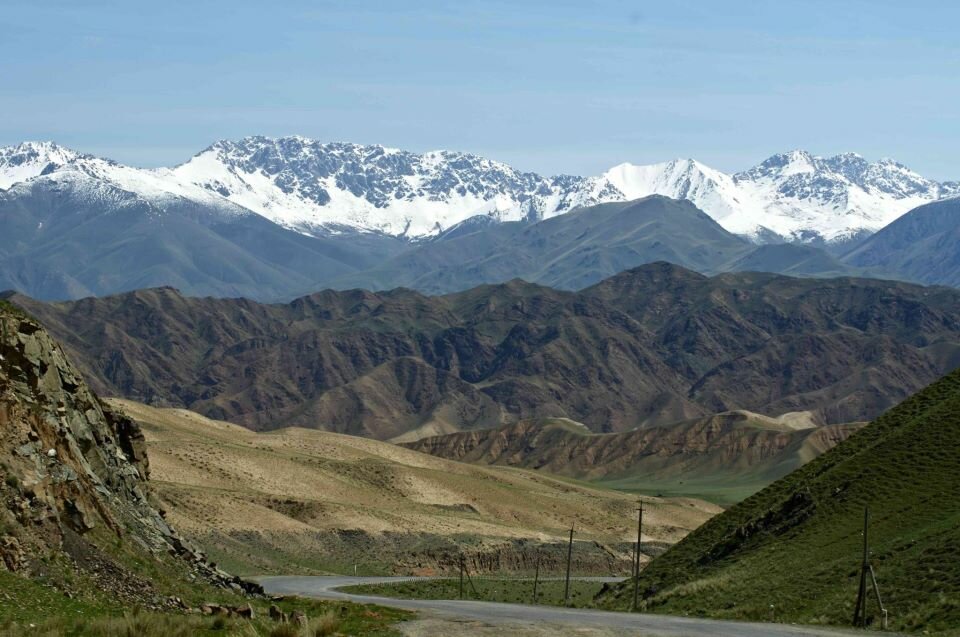

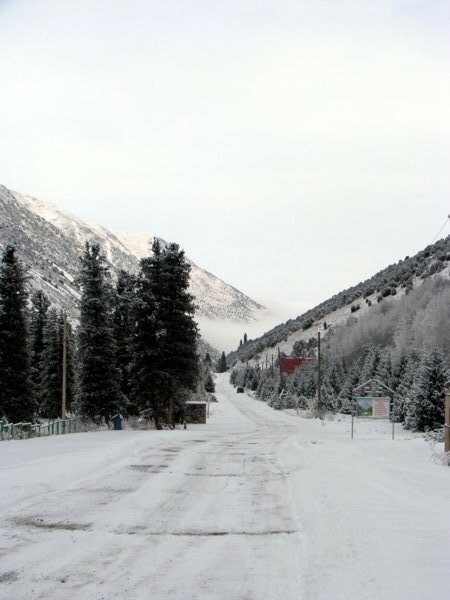
 Bishkek