A valuable research tool
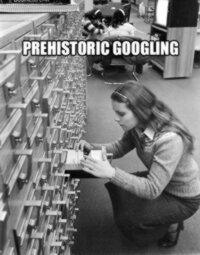
An example of Information Skills
The kids quite often have to produce reports for school, (called a Doklad or Referat). I well remember having to do these when I was at school, but they seem to have things a lot easier these days, (or is that just “old age” talking?).
When we set the task of writing a report on topics like Volcanoes, or Bees, we could start with the class textbook, but you couldn’t really just stop there … for one thing, everyone’s report would be very short … and virtually identical.
For several years, one lesson a week was always timetabled in the school library. I think that it was thought that we could use the time to peruse the shelves and select a book a read … but most of us seemed to reagrd it as a whaste of time – a “doss” lesson. However, it proved to be quite useful at time because was also used to teach us what later came to be known as “library skills” and eventually “information skills” – we learned our way around the library, how to look for things in the card catalogue indexes, and so on … searching for information, making notes, taking references, and then combining the results of our “research” from different sources into a composite whole. We would often use this time to help prepare our assigned reports.
So, those of us who were a bit more studious, or ambitions, would trot off to the local library, which carried a wider selection of materials to trawl. Even so, it was sometimes frustrating that there was so little information – the library would carry just one or two copies of a book, so if you got there late you would find that someone else had taken all the good stuff.
I had a slight advantage because my grandfather had, and gave to my mother when I was quite young, a copy of the seven volume Harmsworth Self Educator. These large, thick volumes had thick green and red card covers and seemed to be embossed in gold lettering. The text was arranged in double columns and was difficult to read because it was in small type, and most of the few illustrations that it contained were black and white line drawing, although there were some photographs and the occasional colour print.
Another reason it was sometimes difficult to read what that it was quite old. I seem to remember that it was dated 1917 or 1918, but it could have been 1914.
For the record: Harmsworth was first published in 1906 with subsequent issues in 1907 and 1914 … and possibly other, but I can’t find any data on further editions. It was the work of the legendary author and educationalist Arthur Mee, a name which still rings a bell with me, even if it passes by the younger generation as a meaningless.
Anyway, as a result, the contents were somewhat dated … even then – not just from before my time, but from the time before either of my parents were born. The topics represented those of interests of a different world … Edwardian England and Grammar schools rather than the Swinging Sixties and Beatlemania. I quickly realized, however, that although some articles were on topics that were not particularly useful or relevant in the “modern world”, others could be a mine of useful information … I particularly remeber the extra credit, the bonus “brownie points” that I earned for my reports on Volcanoes and Bees, thans the supplementary information I trawled out of Harmsworth.
See, I did learn something in those Library Lessons – they weren’t a total waste of time!
About this time a number of weekly publications were being published which were designed to be collected and then “bound” together in a cover making a complete book. I remember the classic was called “Look and Learn” and it was full of short articles of informative text with brightly coloured illustrations. Lots of parents started subscribing in the hope of giving their children a head start in their education … but there were problems.
- Although they were attractive in appearance, they were still perceived as “work” and comics took precedence, be they humourous like the Dandy and the Beano, full of war and adventure stories or tried to combine the “entertainment” with the educational, (like the Eagle).
- Although they weren’t all that expensive in themselves, the comics were a lot cheaper … and when you calculated the cost of buying the complete set, you suddenly realized that it would have been cheaper to go out and buy an encyclopedia or a set of books on particular topics that interested you.
- Indeed, having to appealing to a wide audience, each issue was filled with a variety of topics, many of which seemed uninteresting to the particular individual holding it in his or her hands. In the first few issues, this wasn’t a big problem because it was novel and each article was scoured … just in case. In time, however, you came to know which articles you would find interesting and so read intently, which ones might have something of interest and so you would quickly scan through them, and which ones were going to be boring and could be skipped over. In time, as you picked and chose which articles were worth the effort, you began to get a sense that money which could have supplemented your meager allowance, or “pocket money”, was being wasted.
- What’s more, if for some reason you missed an issue or lost one then the whole set was spoiled … and there was a tendency for the print runs of the early issues to be quite large, but the final issues in the series were produced in quite small quantities as the number of subscribers had fallen off over the course of time.
I sometimes feel that I want to weep when I see how the kids prepare their referats these days. Although there are good bookshops in Bishkek with a variety of attractive and informative books, most of them jump onto the internet and google the topic – if they haven’t already found found an article in the Russian version of Wikipedia. They find an article and cut and paste sections into Word, print it – add a cover sheet and hand it in.
And they get good marks!
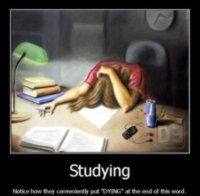
Have you noticed how they put DYING at the end of the word?
Here, the system doesn’t just rely on what is handed in – their marks are also supposed to be based on an oral report, (or summary), and answering questions based on it, (… known as a “defence”).
Once one of the kids, (I won’t mention which one), forgot that he had to produce a referat and once he had been reminded the evening before it was due to be handed in, logged on and produced a lengthy report in half an hour flat. When I protested, he assured me that it would be OK – he’d fluff his way through the “oral defense” of his work. Unfortunately for him, I happened to know something about that particular topic and posed two or three questions which completely threw him. I hope he got the message.
On another occasion, when I tried the same trick on one of the others who had also assured me that he would bluff his way through the defence, he retorted me by saying that he had read the introduction to the Wikipedia article and would simply repeat that in his oral summary – and find a way to dodge any really difficult questions. Apparently his technique worked – as took great pleasure when he told me his grades afterwards.
It’s even worse … there are websites with lots of pre-written referats, you just have t go searching to find one that matches your topic … (I suppose that’s an example of information skills at work) … print our the copy and add a front page. And, if you can’t find one that matches the topic you’ve been set – don’t worry – you can order it … and someone will write it for you … for a fee, of course.
The sad thing is that the same thing seems to happen all over the world. Although there are programs and schemes to identify and filter out plagarism, there still seems to be a lot of it around.
To be fair, I once got taken to task by a reader who told me that there a remarkable resemblance between one of my postcards and the relevant Wikipedia article. Now, as it happens, I had seen the wikipedia article and had used it as one of my sources … not that, one of my sources … I was taught to seek out information from a variety of sources, make notes and then write the report – referring to sources where appropriate. Now I am not an academic and I don’t put footnotes quoting all m y sources … in fact, I can’t always remember where I learned something. (A old newspaper clipping in my collection, for example, might, or might not, have the date and publication it came from.)
As it happens, on this particular occasion, I was able to respond by pointing to several things in the postcard that were not in the wikipedia article – and vice versa … thus, (I hope), illustrating that I had simply used it as a source … once source among several.
Neither am I a journalist, so I don’t have to double, or triple source everything I use in a report. Where I am using a single source I do try to give credit and say where it came from, for example, by providing a link … but I confess that I am not always consistent in this.
Anyway, I have tried to always make it clear that what I write is how I see things … at the time of writing … and that I acknowledge that I might be mistaken.
For the record: It’s worth mentioning that today marks the anniversary of the publication of the first ever encyclopedia, called name “The Encyclopedia, or an explanatory dictionary of sciences, arts and crafts“, in Paris, in 1747. It was the brainchild of the publisher Louis Bretton, who approached Denis Diderot, (the well known philosopher, writer and educator), to coordinate the project. Diderot willingly agreed, and then dedicated 25 years of his life to it, drawing contributions from some of the most eminent people of his time, such as: Voltaire, Goldbach, Rousseay, Montesquieu … and so on.
The Encyclopedia consisted of some 35 volumes – 17 volumes containing sixty thousand articles and 11 volumes of engravings to illustrate the text. In 1776/7, another four volumes were added,and in 1780 a two volume index.
The first edition comprised some 4250 copies, but was reprinted several times. With the impressive list of contributors, (humanist and rationalists), many of the topics were directed against Feudalism and Catholicism and thus it helped to inform and shape the French Revolution. It also led to the creation of similar projects in other countries: Germany; Spain and Russia … and, of course, Britain with the Encyclopedia Britannica.
Oh, yes … and Kyrgyzstan.
The Encyclopedia Kyrgyzstana is not, however, a general reference book … it’s a single volume containing a collection of articles about Kyrgyzstan: the Geography, History, Peoples and Economy, Art and Sciences, Culture and Crafts, Religion and Folklore … and so on.
It was originally based on the Encyclopedia of the Kygrgyz SSR – one of a series of projects launched in the Soviet Union. After Independence a new version was produced with some of the original articles, some rewritten and some new articles. The Academy of Sciences have plans to produce a new edition which will ruin to several volumes … but I won’t take as long to produce as Diderot’s did.







 Bishkek