Going Batty
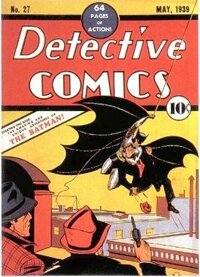
Batman makes his debut in May 1939
In May, 1939, one of my childhood heroes made his first appearance … Batman in Detective Comics No. 27 – which is so iconic that it is one of the world’s most expensive comic books whenever a copy comes up in auction.
For the record: Detective Comics No. 27 had “64 pages of action”, (although if you count the covers that makes 68 pages of artwork in total), and featured nine other stories apart from Batman’s 6-page debut, “The Case of the Chemical Syndicate”; including a 6-page story set in Kurdistan – that’s Kurdistan … not Kyrgyzstan, and a 4-page featuring the insidious Dr. Fu Manchu. Although it carried the dateline May 1939 - According to Mike’s Amazing World of Comics, it actually hit the newsstands on April 18th
Anyway, although I seem to have missed the actual anniversary, it seemed an appropriate moment to both mark the occasion and also take a look at Bats in Kyrgyzstan.
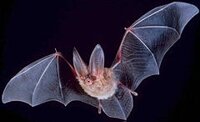
Traditional view of a bat in flight
Bats are an order of mammals, called Chiroptera, with long forelimbs that are covered with a thin membrane which can be deployed as “webbed wings”, making them the only mammals naturally capable of true and sustained flight. (Other mammals said to fly, such as flying squirrels, gliding possums, and colugos, can only glide for short distances).
Although there is some scientific discussion on this point, they are traditionally classified into two different orders of species: megabats – fruit eating bats which are thought to be related to primates and microbats which are insectivores and are closer to shrews. In many languages, the word for bat is similar to that for “mouse” – so in Russian they are called Letishiye meesh - flying mice.
Their ability to fly has helped their distribution and they are to be found all over the world – except the Arctic regions and some isolated islands, and in almost every kind of imaginable habitat.
I am told that there are about 1240 different species of bats – making up about a fifth of all the mammal species in the world. Here in Kyrgyzstan, however, we have only something like seventeen represented.
We are not told in this when Batman makes his first appearance, but it later emerges that the playboy Bruce Wayne chose his Bat persona to strike fear into the heart of the criminal classes, thus making use of the Bat’s reputation as a nocturnal dark and secretive creature – using their echo location to help them navigate in the dark … sometimes at frequencies that can be heard by humans as an eerie screeching.
As it happens, this is probably unfair … despite the image of the “vampire bat”, most bats are not dangerous. Something like 70%, are microbats: insectivores - eating only insects. The second largest group are the “fruit bats”, (or flying foxes”), which eat only fruit – hence the name. There are only a few species that feed from other animals.
Far from being dangerous to humans, they are helpful in terms of providing an effective form of insect control and even serving as pollinators … however, many species are are in danger and in need of protection.
Some of the species of bat that are found in Kyrgyzstan are endangered and are listed in the Red Data Book.
The Academy of Sciences has conducted some research into bat populations in Kyrgyzstan, catching specimens in nets, measuring them and then releasing them. In all my time here in Kyrgyzstan, I have encountered bats on only a handful of occasions – each of which was lying on the ground having been obviously trapped inside a building
Among the bats here in Kyrgyzstan are:
- The Lesser Horseshoe Bat: These are smallish animals, only about 4cm in length. They exhibit a light grey fur on the top of the body, with even lighter fur on the underneath, it is occasionally encountered in deep, dark caves in the foothills of the Alai Mountain Range in the southern Osh oblast. They winter individually, when the wings cover the entire body like a cocoon, but roost with other specimens in “Maternity Colonies”, which can be quite large (although not in Kyrgyzstan where a colony might number only about 80 individuals). Listed in the Red Data Book of Kyrgyzstan as an endangered Species.;
- The Greater Horseshoe Bat: The largest Horseshoe Bat in Central Asia – although an endangered species. A pale ochre colour with a lighter underside. They live almost exclusively in caves and like higher temperatures than most bats. Usually they hibernate from mid October to mid April, gathering in dense clusters of about 35 individuals, completely packing their wings – although, sometimes, they can be found individually. They can be found in the Alai and Turkestan ranges in Southern Kyrgyzstan and also in the Chui oblast.
- Geoffrey’s Horseshoe Bat: A small colony of this medium sized bat (it grows to about 50mm in length) was discovered in the foothills of the Turkestan range in 1967. It is also known to live in colonies with other species of bat. Listed in the Red Data Book of Kyrgyzstan as an endangered Species.
- The Lesser Mouse Eared Bat: The largest of the myotis bats found in Kyrgyzstan, coloured a pale grey top and white underneath. It prefers warm temperatures and avoids human settlements. It hibernates in caves, often alongside the Horseshoe bats in large colonies (possibly containing up to 2000 individuals). Large breeding colonies with anything from 250 to 10000 individuals, have been observed in some gorges up to an altitude of 2000m a.s.l. It can be found in the Chui region, some of the foothills bordering the Ferghana valley and also along the Naryn and Talas rivers.
- The Whiskered Bat: A small bat sporting a “velvet fur”, dark grey above and lighter underneath. It can be encountered in meadows, wooded areas and villages. inhabiting a variety of nooks and crannies at altitudes of up to 2000m a.s.l.; in rocks, small caves and even garrets. Although it has been seen in Issyk Kul, it seems that it is most frequently encountered in the Southern regions around Osh and the Turkestan range.
- The Common Pipistrelle: Central Asia’s smallest bat, and the most commonly encountered species in Kyrgyzstan. It is a migratory species with large numbers travelling South from Kazakhstan and Siberia in the Winter time. Breeding colonies, (with about three or four hundred individuals), can be found in villages in the Western end of the Chui valley and in Talas as well as in some of the larger villages in the foothills of the Fergahana valley. In the Central Tien Shan, they have seen in some fruit and coniferous wooded areas.
- Savi’s Pipistrelle: A light coloured brown, (or even yellow), bat which is rarely encountered but has been seen in small numbers rocky regions; around Bishkek and the Talas valley; in dry hills in Southern Kyrgyzstan around Aravan and Nookat; and in a salt mine near Kochkor;
- Noctule Bats: a comparitively large reddish coloured bat … this migratory species tends to travel through Kyrgyz territory but breeds elsewhere.
- Serotines: a relatively large, fur covered bat, which inhabits dry valleys, but gathering in large colonies, (of between three and five hundred individuals), for breeding, when then might move into garrets. As migratory creatures, they seem to be encountered only in summer time and winter elsewhere;
- Botta’s Serotine: Only one specimen seems to have ever been caught in Kyrgyzstan – in Bishkek in 1933, although observations have been recorded in the Ferghana valley.
- Bobrinski’s Serotine: according to one source, this species of bat is known in regions of Kazakhstan to the North and it is not really known if it is to be found in Kyrgyzstan.
- Northern Bat: A small, light brown coloured bat – but only one example seems to have ever been caught – although it is thought likely that some of these are to be found over the border in China and might be found in the North Eastern part of Kyrgyzstan.
- The Particoloured Bat: These small bats are covered with dense silver coloured fur. Only six specimens of this species bat have been caught in the country between 1951 and 1996; four in the Southern regions, one in Bishkek and the last in the Issyk Kul region. The timing of these observations suggest that Kyrgyzstan may lie on a migratory route between Summer and Winter habitats.
- The Eastern Barbastelle: a small bat – about 50-60mm long with thick, silky black fur, which has a silvery tint on the undersides. A particular feature which distinguishes it from other bats is a fold of skin above its forehead which connects its ears. It has a short, triangular snub nose. The Barbastelle feeds by flying low over water and near the edges of forests. It is found in caves in the Alai and Turkestan ranges in the South of the country. Listed in the Red Data Book of Kyrgyzstan as an endangered Species.
- The Grey Big-Eared Bat: As the name suggests, these small bats have large ears; larger than the rest of their heads. They have a thick brown fur, lighter on the underside. They don’t migrate and winter either singly or in small groups. Although they are found in a variety of landscapes, trees are an important feature of their habitat. They live in caves, grottos or in garrets and have been observed in Sary Chelek, Arslan Bob, the foothills of the Ferghana and around Lake Isyk Kul. .
- The Free-tailed Bat: These are large bats that can reach about 8-9cm long. The bat takes its name from the fact that its tail extends half beyond the wing membranes, which are narrow and long. It has wide, thick ears which extend forward and are as long as the face. They have large mouths with lips that are encased in folds of fat. They are encountered only the vicinity of Osh, and colonies can number about 100 individuals although specimens have been found in a number of places suggesting that they might be a migratory species. Listed in the Red Data Book of Kyrgyzstan as an endangered Species.;
- The Desert Long-eared Bat: a large bat which can grow to over 80mm in length. It has long, thin, sharp ears which are pink in colour. It also has a large nose which is about half the length of the ears. It inhabits steppe foothills and rocky locations in desert plains. In neighbouring Uzbekistan it has been found in settlements – roosting in mosques, bazaars, and holes in wattle and daub structures as well as in cliff grottos, but although some specimens have been observed in Kyrgyzstan, no roosts are known. Listed in the Red Data Book of Kyrgyzstan as an endangered Species.
_______________
Oh, yes, and For the record: Superman made his first appearance in Action Comics No.1 … which carried the dateline June 1938. As a result, tomorrow, June 1st is usually credited as the date of his debut … but according to Mike’s Amazing World of Comics, it probably hit the newsstands on 3rd May.





 Bishkek