The buck stops … where?
At the moment I am trying to read ‘News from Tatary‘ by Peter Fleming, originally published in 1936 and telling the story of his 3500 mile journey from Peking through the, then, mysterious province of Sinkiang to India with the Swiss journalist Ella Maillart. Apparently she also wrote an account of the journey, ‘Forbidden Journey’ – which apparently differs in many respects from his. Although I have read her book ‘Turkestan Solo’ about her exploits in Soviet Central Asia, I haven’t been able to track down a copy of Forbidden Journey … It’s difficult to get English books here in Kyrgyzstan.
One of the chapters in the middle of the book opens with:
“It seems to me that there is too much grumbling in this book … the pages seem loud with complaint … these […] must be building up for you a picture of a hard life in an unkind world. This picture is a false one.”
Those words struck home as I thought back over the recent postcards. I am not sure what sort of image they must be conjuring up, but each is only a snapshot from one point in time and gives only a partial view of all that is happening here.
The weekly postcards give just a “snippet” of the week’s events. I don’t claim that they represent the complete picture or give a full description of the situation in the country. As with the press accounts of what is happening in Kyrgyzstan, I can’t cover everything and wrote only about the most salient news of the week which although important only gives a partial picture.
This week for example, the main item of news is the trial related to the events of April 7th, when people died as the White House was stormed, shots exchanged between the protestors and the troops defending the building, and many lives were lost. After some delays, the trial has finally started, but been postponed, partly due to the scenes of disorder as members of the public inveighed against the accused and their lawyers.
Twenty eight people are accused of the “mass killing” of demonstrators on April 7. They include 6 high level officials, (Former President Bakiev among them), who fled the country and are on the “international wanted list”. Their cases are being tried ‘in absentia’. That, in itself, is a controversial point as some legal experts claim that the current arrangements seems to go against the provisions of the legislation for such proceedings.
The rest are officers and soldiers of the elite Alpha Unit who were on duty that day.
One of the defendants was brought to the court in an ambulance and entered the court on a stretcher.
Because of the public interest in the trial, it is being held in the Sports Palace which has the capacity to host a large ‘public gallery’. The authorities were expecting something like 600 to 1000 people to attend the trial, including 8 lawyers and representatives of victims, 7 prosecutors, 306 victims, 78 legal representatives, 129 witnesses, along with representatives of the media and civil society activists are expected to take part in the trial members of the public. As it happens the building was cordoned off by some 300 police as protestors amassed outside, and inside there were scenes approaching a “brawl” – not my word, that’s how one of the press reports described it.
Apparently, relatives of the victims uttered threats to the defendants and their lawyers throughout the proceedings. During the formal process establishing the identities of defendants, there was a demand to publish the addresses of where they lived. When asked why the reply was in order to “set their houses on fire.” One of claimants hit a relative of one of defendants with a crutch. Members of the public attempted to get onto the stage, where the defendants and their lawyers were, but were held back by police. The lawyers challenged the judge, who retreated to the consultation room to make the decision on the motion, and the trial went into recess. I am not sure when it will restart.
Of course, it has raised a lot of comment. Although the Ministry of the Interior has insisted that they can preserve order during proceedings and the Vice-Prime Minister is adamant that the trial will be fair and transparent, the American Embassy and several Civil Rights groups have issued statements expressing concern. Some of the lawyers are suggesting that it would be better to televise the proceedings rather than expose the accused and themselves to the vitriol that they saw on the opening day.
For those who are interested, there’s a short video of it on line at: http://www.blive.kg/video:46474/
As I was reading the commentaries on the case I couldn’t help but think of Henry VII. He came to the English throne as a result of his victory at the Battle of Bosworth on August 22nd, 1485, but probably had the weakest claim to it of any King or Queen of England. After the battle, in order to secure and strengthen his position, he backdated the start of his reign by one day, to August 21st in order to enable him to take action against those who fought for his opponent, Richard III. This caused a lot of controversy as it meant that in a future battle anyone fighting for the ‘rightful king’ against a usurper would be at risk of execution if they lost, and this might undermine their courage in battle and their loyalty to their king. It was over ten years later, in 1496, when Henry had successfully secured his position that he felt able to allow Parliament to pass a law to the effect that any person serving the king de facto, (exercising the position and office of King, in fact if not legally, at the time), is not guilty of treason, or of any other offence, if he wages war against the king de jure. It is still in force in Britain, (well, in England and Scotland – I’m not sure about the rest of the country).
The Statue De Facto King strikes me as raising interesting questions – if the arrest of these soldiers might not have been at the back of other serving soldiers during subsequent disturbances? Will the authorities be able to rely on the courage and loyalty of their subordinates in the face of future disruption?
The question of undermining the morale, commitment and loyalty of the police and armed services has exercised much of the debate about the wisdom of holding the trial – especially where the defendants are what are often referred to as “foot soldiers”. They were doing their duty and protecting the government house. Bakiev claims that the government troops only fired in response to shots coming from the crowd, and were under orders. If they had not carried out their orders then they would have been responsible of a dereliction of duty. Supporters of the soldiers also say that there is no ballistic evidence to support a case against these soldiers, because their weapons cannot be tied to the shooting of any of the protestors. In any case, they say, the soldiers should be tried under a military court, as they were serving at the time, and not a civil court. I haven’t seen any actual mention or comparison with the ‘show trials’ of the Stalinist era, but despite the claims of the Vice Prime Minister that it will be a fair and transparent trial, there are those who claim that it is all political and the results, the verdicts and sentences, all decided beforehand.
I’m not an expert in this field but, as a layman, it seems to me that it’s the person who makes the decision and gives the order who has to carry the responsibility for their actions. That’s why President Truman used to have a sign on his desk saying “The Buck Stops Here”.
Anyway, that’s probably enough on this theme for the time being … as I said, like Peter Fleming, I am conscious of too much “grumbling” in what I have written to date which possible gives a false picture of life at the moment here in Bishkek. After all, those of us not directly involved in the protests and furore are busy getting on with our lives.
I suppose, however, that I can’t escape without a couple of comments about two other continuing “big stories” of the week.
The first is the seemingly never ending story of the election. It is over and done with, the parliament has met, but we still don’t have a new government. Talks continue between the parties who have all met in their individual caucuses. One party has, however, declared that it is not seeking with of the two top jobs, Prime Minister or Toroga – Speaker of the Parliament. Almazbek Atambaev, who’s been given the commission to try and form a coalition, has departed on a trip to Moscow, raising speculation about whom he will meet and what discussions might take place there. Roza Otunbaeva has also left on a trip to Russia, but this time to St. Petersburg, for a meeting Prime Ministers of the CIS, (Commonwealth of Independent States).
On a different front, it’s not just the Kyrgyz who are interested in seeing the new parliament get down to work and the question of the government resolved. Several foreign governments are interested to see what alignment the new government might adopt. But there are other, ‘little people’, (to quote an unfortunate remark from a BP executive), who also have an interest. While I have been reviewing a wide variety of blogs for www.links.kg , I came across one observation by a young Kyrgyz blogger that most blogs about Kyrgyzstan are either by foreign missionaries in the country or by families that have, or are seeking to, adopt a Kyrgyz child. (I am not sure that he is correct – there are an awful lot of travel blogs and blogs written by volunteers such as those here with the Peace Corps. However, he is right in that there are an awful lot of them.) For about a year, now, the question of adoption has been on hold after a scandal about irregularities in some of the previous cases. The attempt to review procedures and the legislation was interrupted by the revolution and even the US State Department has been trying to raise the issue with the Kyrgyz authorities. Roza Otunbaeva has hit the Social Media with the publication of a letter to some people who are trying to adopt, basically saying that we are doing what we can to expedite the review but, at the moment, our hands are tied as we are waiting for the parliament to begin work and consider the necessary changes.
The other rumbling news story concerns the fuel supply for the Manas Transit base. A United States Congressional investigation into the operations of Mina Corp, (which is an off-shore company registered in Gibraltar), may have failed to find “evidence of wrongdoing”, but American officials are not ruling out the possibility of a “follow-up investigation” at a future date. Apparently, a new probe could be opened if an investigation into corruption which is currently being carried out by Kyrgyz authorities results in indictments of suspected wrong-doers in Bishkek. The discovery of “reliable evidence” by Kyrgyz investigators could “possibly become a stimulus for a new round of investigation,”
I said that life goes on for the rest of us … I could say more about the round of correspondence, meetings, lunches and so forth that have taken place during the week but let me simply highlight a few things
This morning, for example, I noticed that at eight o’clock it was still dark – not ‘pitch black, but dark all the same. Kyrgyzstan is one of the two countries in the world which operates on “summer time” throughout the year – Iceland is the other – so instead of putting our clocks back at the end of October, they stay resolutely at GMT+6. This means that our mornings tend to be dark, but that it lighter for longer in the evenings … not that I can say I’ve notice it that much … it still seems to be dark by the end of the of the working day.
This morning I also noticed that it had snowed overnight. Not much. There was a light sprinkling of snow of some of the cars parked in the yard overnight. There was none on the ground, however, as it had either melted or been washed away by the dreary drizzle that followed.
And finally:
For those of us involved in tourism, we used to understand the acronym as World Tourism Organization – a UN agency which brought together the members of the United Nations to consider issues relating to one of the World’s major industries … but a few years ago we had to get used to a new acronym as it changed its name to UNWTO – The United Nations World Tourism Organization.
At the time we asked ourselves why on earth they would want do that – WTO is clear and simple, easy to remember and also rolls off the tongue. The answer was simple … there was a “new kid on the block” that had lain claim to those three letters of the alphabet – the World Trade Organization.
Well, yesterday I came across a new WTO, (well new to me – it’s been around since 2001), the World Toilet Organization. I kid you not!
The WTO was founded, as I said, in 2001 by a Singaporean, (Jack Sim), to lobby and work for sanitation work and development around the world. They say that globally diarrhea is the leading cause of death in the world today – killing more people than have been killed in all the conflicts in the last century. An estimated 2.6 billion (yes, billion) people – including 980 million children – do not have access to basic sanitation in the world today.
They currently have 235 members, in 58 different countries – either professional individuals or organizations working in the field. Unfortunately they don’t have members in Kyrgyzstan … which ios not renowned for the quality of its toilets. Toilets, and in particular public toilets, are a common topic of conversation amongst visitors to the country, whether they be tourists or consultants, and they represent one area of the infrastructure where the Kyrgyz Republic really needs to invest. Indeed, there has been a lot of comment and controversy on this topic in recent years … led by the previous Japanese ambassador to the country who raised the topic at almost any and every opportunity. They may not be the worst toilets in the world – but public toilets are “few and far between” … and in many cases, (especially outside the cities), will be of the “squat” variety which are unfamiliar and unpopular in the West. Even these come in different forms … some may simply be a hole in the ground. Almost all smell unpleasant. Sorry, but that’s how it is.
Anyway, the WTO declared the day of their founding, (19th November), as World Toilet Day as a way to focus attention on the issue. That’s how it came to my attention on Friday.
As far as I am aware the day hasn’t been adopted by the UN, although the organization works with several UN agencies along with other donors, on a variety of projects around the world. This year they organized some 30-odd events around the world – in 17 different countries – to commemorate the day: Australia, Bangladesh, Bulgaria, Cambodia, Canada, France, Germany, Ghana, India, Ireland, Nepal, Nigeria, Singapore, South Africa, the UK, the US and Zambia.)
Unfortunately, Kyrgyzstan wasn’t on that list, but as the list seems to change from year to year, (Last year there were events in 20 different countries), maybe next year.
As I said, like Peter Fleming, I am conscious that all this may give a distorted view of life here in Bishkek, but I have already exceeded my planned word count for the week … I hope that some of the other postcards on ianbek.kg give a more positive impression.


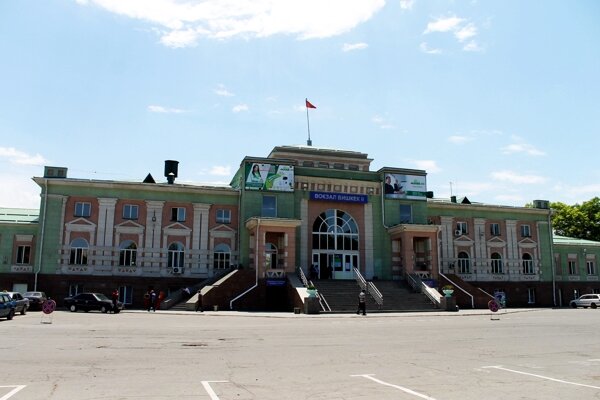


 Bishkek
come on Ian, tell it like it is
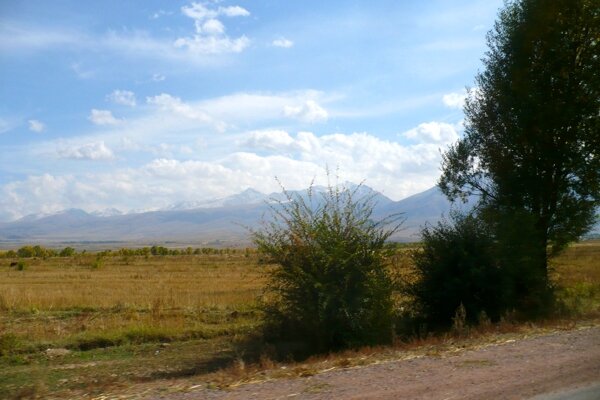
1. the weather has been fantastic and the autumn scenery with trees and mountains wonderful – there is no better place to live
2. the complete absence of real government for the last 2 months has been blissful – long may it continue
3. all court cases with powerful interests are a sham – so no news here
4. criminal cases against the elite defenders of the realm – just one the the many things in KR which make it impossible to really understand – but this one is guaranteed to ensure that the current leaders will have no defence when their time is up – and it will be one day
but yours is more interesting to read!