A secular society?

One of the most iconic pictures of the Twentieth Century
One of the most iconic images of the twentieth century was taken Bill Anders, a member of the crew on the Apollo 8 mission, on December 24, 1968, showing the Earth seemingly rising above the lunar surface.
This was the second manned mission of the Apollo space program, one of a series of flights to test the equipment and procedures for the mission that was to send Armstrong, Aldrin and Collins into the history books aboard Apollo 11: Armstrong and Aldrin as the first men to step foot on the moon whilst Collins remained in the Command module, fretting if he would have company for the return journey.
Apollo 8 was launched on December 21, 1968 and became the first manned space craft to leave Earth orbit, reach the Earth’s Moon, orbit it and return safely to Earth. The three-man crew, (Frank Borman, James Lovell, and William Anders), became the first humans to travel beyond “low Earth orbit”, (and as such, the first to see Earth as a whole planet), and then the first to directly see the far side of the Moon.
It took three days to reach the moon and Apollo 8, took 20 hours to make 10 orbits of the moon before firing its rockets to send it back home.
I remember the astonishment we all felt when the pictures were published … the blue and white orb in the midst of a pitch black sky. There was a definite feeling of redefining our place in the universe and that nothing would ever be the same again.
For the record: Earthrise is only visible from someone in orbit around the Moon. Because of the Moon’s synchronous rotation about the Earth (i.e., the same side of the Moon is always facing the Earth), no Earthrise can be observed by a stationary observer on the surface of the Moon.
The mission actually proved controversial due to a broadcast made by the astronauts from moon orbit on Christmas … at the time, it was the most watched TV program ever. The controversy centred around the fact they read out the first 10 verses from the book of Genesis in the Bible:
Bill Anders - ”We are now approaching lunar sunrise and, for all the people back on Earth, the crew of Apollo 8 has a message that we would like to send to you.
In the beginning God created the heavens and the earth.
And the earth was without form, and void; and darkness was upon the face of the deep.
And the Spirit of God moved upon the face of the waters. And God said, Let there be light: and there was light.
And God saw the light, that it was good: and God divided the light from the darkness.
Jim Lovell
“And God called the light Day, and the darkness he called Night. And the evening and the morning were the first day.
And God said, Let there be a firmament in the midst of the waters, and let it divide the waters from the waters.
And God made the firmament, and divided the waters which were under the firmament from the waters which were above the firmament: and it was so.
And God called the firmament Heaven. And the evening and the morning were the second day.
Frank Borman
“And God said, Let the waters under the heavens be gathered together unto one place, and let the dry land appear: and it was so.
And God called the dry land earth; and the gathering together of the waters He called seas: and God saw that it was good.
And from the crew of Apollo 8, we close with good night, good luck, a Merry Christmas – and God bless all of you, all of you on the good Earth.”
The trouble was that the First Amendment to the American Constitution provided that:
Congress shall make no law respecting an establishment of religion, or prohibiting the free exercise thereof; or abridging the freedom of speech, or of the press; or the right of the people peaceably to assemble, and to petition the Government for a redress of grievances.
At the time, several of the states in the Union actually had what is called an “Established Church“, (some of which survived into the following century), but this measure was intended to prevent the government in Washington from doing so. Later it was applied to individual states and then, in the middle of the last century, the Supreme Court began to interpret it as meaning that the government, (neither individual state governments nor the Federal government in Washington), should “promote religion” … according to one of the Justices in a landmark judgement, “government should not prefer one religion to another, or religion to irreligion.”
This has been taken as defining the separation of Church and State. Whatever the state does, and the laws it enacts, should be secular in purpose, without advancing or restricting religion and religious practices and should not foster an “excessive entanglement” of government in religion.
The amendment may have been intended to protect the free exercise of religion, but it has also been used to protect freedom of expression and the freedom of the press, the freedom of association and assembly … as well as many other, more controversial, topics such as the right to produce and access pornography, political campaign financing, the desecration of the flag.
So … here were three serving members of the armed forces – government employees working on a government funded and sponsored mission reading to the public a passage from a Holy Book. As a result, Madalyn Murray O’Hair, an atheist activist and the founder and President of the organization American Atheists decided to sue the government for what she saw as a breach of the First Amendment.
When the case came to the Supreme Court, in their wisdom the Justices decided to dismiss it on the grounds that they didn’t have jurisdiction.
There have been many similar legal disputes – over the phrase “In God We Trust” which appears on their currency, or “… before God” in the Pledge of Allegiance, or the depiction of tablets conveying the Ten Commandments in a courtroom …
To me the argument has always seemed a little esoteric – as Church and State dance around each other in search of the best form of interrelationship between themselves. It is however a real and vital issue; the relationship between Church and State … between Freedom and Regulation … between Belief and Practice … it’s not easy to know what is the best approach to adopt and different countries have each adopted a different way of addressing the issue which they feel best suits their circumstances: Theocracy, Assimilation, Accommodation, Separation … and so on.
In Britain, we have an established church; the Church of England. There are Bishops in the House of Lords ex-officio, (by virtue of simply being a Bishop), many local councils have their Chaplains, Chaplains serve in the service and minister in prisons and hospitals, the state not only permits but also supports some “faith based schools” … and so on.
However, reverence is also given to other faiths … although, I have to admit that this has not always been the case; Catholics, Dissenters, Jews and others have all been discriminated against at various times in our history. People have been burned at the stake for their beliefs – or for refusing to take an oath of loyalty. There have been disputes over the question of Sikhs having to wear crash helmets instead of their turbans if they want to ride motor cycles, and the right of Muslim women to wear shawls or the Hibab.
There are several laws that regulate the affairs of the church, including special courts which hold their authority from the Queen, (the Crown), who is ex-officio the Supreme Governor of the Church of England and which have jurisdiction over matters dealing with the rights and obligations of church members, now limited to controversies in areas of church property and ecclesiastical disciplinary proceedings. They only affect the established Church – the Church of England and the others for the main part of governed by the general rule of law.
The most recent controversy over the establishment of the Church revolved around the question of appointing Women Bishops. It seems that although most of the hierarchy were in favour of this measure, the Church’s synod voted, narrowly, to reject it … raising questions about the role of the outmoded church in helping to govern modern, multi-cultural, multi faith diversity that now constitutes Britain, and led to calls for the disestablishment of the Church.
Then there is the issue of Gay Marriage … I have watched with interest from afar as the debate has developed as to whether, if and when the legislation approving such unions is enacted should the churches be forced to marry same sex couples or should they be allowed an “opt out”.
There used to be provision for prosecutions for blasphemy or irreverence toward holy personages, religious artefacts, customs, and beliefs, until 2008. The last prosecution was brought in 2007, but was dismissed; the last successful conviction was against the editor of Gay News for the publication of a poem which allegedly vilified Christ and his life … he was given a suspended sentence, (although the judge commented that it was “touch and go” whether or not he would actually be sent to prison), and the last person to be imprisoned for an offence of blasphemy was sentenced to nine months hard labour in 1921 for publishing two pamphlets which satirized the story of Jesus’ entry to Jerusalem, (it was his fourth conviction for the offence).
There has been a far stronger approach to blasphemy elsewhere, for example in Pakistan … with stories appearing in the press highlighting one case or another. Just this weekend, an alleged blasphemer was apparently taken from a prison station by a mob, killed and his body set on fire … the whole event being filmed on mobile phones.
There have been other cases where some aspect of the law has interacted with religion, principles and practice … for example being used to justify banning the wearing of religious symbols, and the case of a guest house owner to refuse on religious grounds, (or grounds of conscience), to accommodate a couple in a double room, (as opposed to a Twin room), because they weren’t married … and to make matters worse – it was a gay couple.
Here in Kyrgyzstan, in many ways the situation is just as complex as in the States or Britain:
The Preamble to the constitution asserts that the people of Kyrgyzstan ”Aspiring to root the rule of law as well as ensure social justice, economic welfare and spiritual development of the people;” but the first clause asserts that the country ”… is a sovereign, democratic, secular, unitary and social state governed by the rule of law.”
When a new draft of the constitution was being drawn up after the 2010 revolution, there was a certain amount of discussion about whether or not to include the word “secular”. In the end the “separatists” won the argument and it was included.
Although the Constitution and the various laws provide for freedom of religion, and this has generally been respected, the Government has sought to restrict the activities of radical Islamic groups that are considered threats to stability and security. For example:
- Article 5 of the “Law On Religious Freedom and Religious Organizations” affirms that “the State does not interfere with the activity of religious organizations that adhere to established laws; does not allow for establishing advantages or restrictions of one religion over another; does not finance the activity of religious organizations and activity of propagating atheism.“
- Article 8 of the Constitution prohibits the formation of political parties on religious and ethnic grounds, as well as activities of religious organizations that jeopardize the state, constitutional system, or national security.
- Article 85 of the Constitution provides the Constitutional Court with the authority to determine the constitutionality of a religious organization’s activities.
- The State Agency for Religious Affairs (SARA, formerly called the State Commission on Religious Affairs – SCRA), is responsible for promoting religious tolerance, protecting freedom of conscience, and overseeing laws on religion and all religious organizations, including schools, must apply to it for approval and registration.
- The 1997 Law on Religious Freedom and Religious Organizations forbids the teaching of religion (or atheism) in public schools.
- the law on “Countering Extremist Activity“, passed in 2005, sought to “halt extremist activities by religious organizations or groups.” Law enforcement officials have acted under this law to detain members of banned organizations, such as Hizb-ut Tahrir, for distributing leaflets and other materials deemed to be of an extremist nature. Other groups have also been banned including the “Moonies”, whilst others, (The Church of Jesus and the Latter Day Saints – the Mormons), and several local Baptist churches have had trouble in obtaining registrations. In order to receive registration they have to have 200 members, (it used to be just 10 – how many local churches in the west can claim such a sizeable congregation of “active” members?). Without registration from SARA, they cannot register with the Ministry of Justice which prevents them from renting accommodation, opening bank accounts and completing other basic functions in order to operate.(The situation in neighbouring Kazakhstan has been even more extreme with the number of different faiths recognized by the authorities being substantially reduced, leading some to question whether Kyrgyzstan will, as so often in other matters, follow their example. )
There are two Muslim holy days (Kurman Ait or Eid al-Adha, and Orozo Ait or Eid al-Fitr) and one Russian Orthodox holy day (Orthodox Christmas) that are recognized as national holidays and the President, Government and various officials and public figures send “greetings” to Muslims and Orthodox believers on their major holy days which are usually printed in the mass media.
Although the Government does not officially support any particular religion, a Government in 2006 decree recognized Islam and Russian Orthodoxy as traditional religious groups. This phrase has appeared in the press several times recently as leaders of the two faiths have met to discuss a common approach to social and other issues. Some people seem to think that this will lead to a “squeeze” being placed on other, “non traditional” groups.
The highest Islamic authority in Kyrgyzstan is the Muftiate, (officially, the Spiritual Administration of Muslims of Kyrgyzstan – SAMK) which was established in 1993. It oversees all Muslim organizations. The Mufti is the official head of the Muftiate and is elected by the Council of Ulemas, which consists of 30 Islamic clerics and scholars. There has just been an election for a new Mufti which was marred by allegations of fraud and tax evasion, and disputes over the allocation and cost of permissions to undertake the Hajj – or annual pilgrimage to Mecca.
The Muftiate has established a commission which reviews and standardizes Islamic educational literature printed and distributed in the country and which reviews new books on Islamic themes prior to publication. The Muftiate has the authority to ban publications that do not meet the established standards, an initiative it started and the Government supports. This appears to have become a fairly hot topic recently with fears that amendments to the law are intended to increase censorship. Also, the Muftiate got drawn into a widely reported controversy over the banning of a film at a recent film festival … the “I am Gay and Muslim” was filmed in Morocco and featured a number of gay men and how these two aspects of their lives interacted. It had been shown in many other festivals around the but a court decision means that it is now impossible to obtain, possess or show a copy anywhere in the republic.
The Russian Orthodox Church is administered by a newly created Bishopric, based in the Cathederal of the Resurrection in Bishkek.
In fact, the majority of the Kyrgyz are Muslim, (official sources estimate that 80 percent of the population is Muslim, almost all them are Sunni – maybe something like a thousand Shi’a). According to official figures, the Russian Orthodox church comprises about a tenth of the population. Other religious groups account for a very small percentage of the population and include: Seventh-day Adventists; Roman Catholics, Baptists, Pentecostals, Lutherans, Presbyterians, as well as “non-denominational Protestants” and Charismatics. In addition, there is a small Jewish community; a Buddhist temple serves the small Buddhist community and 12 registered Baha’i houses of worship. A recent trend has seen the rise of the Tengists, claiming to follow the traditional faith of the nomadic Kyrgyz. There is no official estimate of the number of atheists, but as part of a former communist superpower, it can be assumed that there are a number of them.
Although most religious groups and sects operate with little interference from the Government, or each other, there have been cases which have attracted the attention of the world’s press … for example, there was an increase in tensions and ostracism, (including the denial of burial rights for the deceased), between Muslims and former Muslims who had converted to other religious groups.
Other thorny issues that have arisen recently have been a controversy over whether Muslim girls and women are allowed to wear the Hibab to school and university, and attempts to amend the law in order to legalize polygamy.
I am not sure that any of these solutions to the problem, (American, British or Kyrgyz), is the most appropriate. I confess to being of the opinion that Religion is a private matter … between the individual and “Big G” … so the law should not really be involved. I don’t want to see another Thomas More losing his head because he refused to acknowledge the authority of the King as the Head of the Church.
The normal provisions of Civil law can be used to regulate relationships between individuals … Commercial law can regulate business relationships … and Criminal law can regulate behaviour that society deems reprehensible.
Religion is a part of society and it will influence attitudes including social attitudes and relationships, and the provisions of the law … “pressure groups” of like minded individuals may push for this or that measure to be adopted, and then it should be a case of discussion and persuasion. I am not sure, however, that the state belongs in the pew, (not in America, not in Britain, nor in Kyrgyzstan), and neither should the “Church” be institutionalised and become a branch of the state.
But, that’s my opinion … others may chose to disagree. No problem.



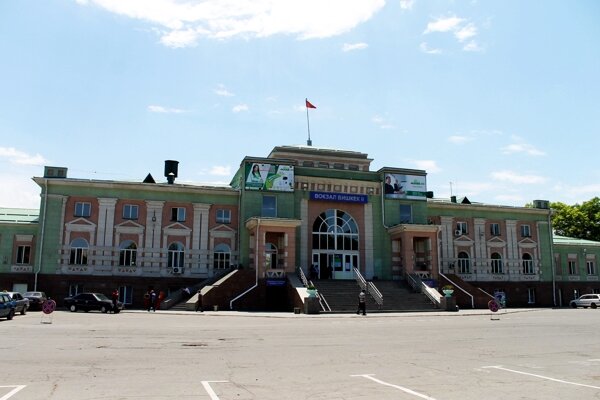


 Bishkek