Diabetes
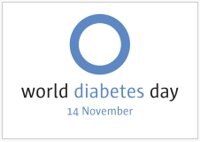
November 14 : World Diabetes Day The Blue circle is a global symbol for Diabetes - the circle symbolizing life and health, the colour reflecting the sky which unites all nations and the entirety representing "the unity of the global diabetes community in response to the diabetes pandemic". The logo is available in over 60 languages - including Kyrgyz
World Diabetes Day is part of a global awareness campaign which is held on November 14th of each year. The event is commemorated in over 145 countries around the world – including, of course, Kyrgyzstan.
This date was chosen as it marks the birthday of Frederick Banting – who, along with Charles Best, first conceived the idea which led to the discovery of insulin in 1922.
The day was first inaugurated in 1991 by the International Diabetes Federation, (IDF), and the World Health Organization, (WHO), to draw attention to the alarming rise of diabetes around the world. In 2007 it was adopted as an “official United Nations Day”
Each year, World Diabetes Day is centred on a theme related to diabetes. For the period 2009–2013 the overriding theme theme has been Diabetes Education and Prevention but in the past topics have included: Diabetes and human rights, Diabetes and lifestyle, The costs of Diabetes, Diabetes and obesity, Diabetes and Footcare, Diabetes in the disadvantaged and the vulnerable, Diabetes in children and adolescents and Talking about Diabetes.
In 2012 the organizers hope to link the need for action with the protection of the health of future generations under the slogan Diabetes: Protect our Future.
It seems to me that we probably do need such days as this because, until recently, I didn’t really know much about it. I knew it was a disease which involved blood, sugar and insulin – usually involving injections; that the onset of the disease can originate in childhood or in later life … and that it can be life threatening.

Kyrgyzstan occupies First place in the world for insulin related deaths
Indeed I know one person who died a few years ago because the syringe used to give him his insulin injection was the wrong sort … apparently it needs a special sort of needle and the one that was used happened to be a general purpose syringe … the mix-up caused quite a scandal.
In fact, on of the recent Daily Figures featured by the popular newspaper Vecherinye Bishkek was the statistic that “Kyrgyzstan occupies First place in the world for insulin related deaths”
Apparently Diabetes mellitus, (or more simply Diabetes), is a group of metabolic diseases in which a person has high blood sugar. This could be because their body does not produce enough insulin, or because their cells do not respond to the insulin that is produced.
Although there are other forms of the disease, the three main types of diabetes: the first (type 1) resulting from the body’s failure to produce insulin and requiring either insulin injections or wearing an “insulin pump” in order to provide the body with the chemical; the second (type 2) results from “insulin resistance”, where the cells fail to use insulin properly … as I understand it this is hereditary and usually affects older people – typically over 40; the third is known as “gestational diabetes” and occurs when a pregnant women with no previous diagnosis or record of diabetes develop a high blood glucose level.
All forms of diabetes have been treatable since insulin first became available in 1921, and type 2 diabetes may be controlled with medications, however, both types 1 and 2 are chronic conditions that cannot be cured. Without proper treatment, diabetes can cause many complications, and some serious long-term complications include cardiovascular disease (leading to heart attacks), chronic renal failure, gangrene and diabetic retinopathy (retinal damage). As a result, it is important for sufferers to get adequate treatment, as well as controlling blood pressure control and other “lifestyle factors” such as smoking cessation and maintaining a healthy body weight.
According to a Press release from the Ministry of Health, about 250 million diabetes cases have been registered all over the world, but the real number of diabetics is two times higher. In addition, the incidence of the disease grows annually by 5-7 percent in all countries, which means that it doubles every 12-15 years. Consequently, the catastrophe growth in the number of diabetes patients is turning into an epidemic. ”If three years ago the statistics said a person dies from diabetes and 2 new people are diagnosed with the disease every 10 seconds, this now happens every 7 seconds.” Amongst the other startling statistics that were quoted in the statement were that:
- over 1 million lower limbs amputations take place due to diabetic diseases and
- almost half of the blind are people who lost their sight from diabetes.
Here in Kyrgyzstan …
- according to the International Diabetes Federation, the prevalence of diabetes in Kyrgyzstan, among people aged between 20 and 79, will grow from 4.3% in 2003 to 5.8% in 2025;
- a rate of 4.3% suggests a total number of people with diabetes of around, 224,000 – however a report issued in 2007 said that officials estimated the number to be just 25,500! Another report in 2009 quoted 28893 – with 2238 requiring insulin. Specialists working in this field point out that for each person represented in the official statistics there are as many as ten who were as yet undiagnosed … There aren’t any more recent studies on diabetes in Kyrgyzstan and there doesn’t appear to be a National Registry of people with diabetes … so most of the statistics seem top come from the State Statistical Committee;
- amongst the people diagnosed as persons with diabetes in that report, it was estimated that 10% had type 1 diabetes;
- prevalence rates vary greatly between different regions with a range of 503 to 1550 cases per 100,000 population.
- rates of type 1 diabetes amongst children under 14 in Bishkek are 8.4 times higher than those in rural areas
- deaths attributed to the condition have almost doubled (from 6.5 per 100000 in 1990 to 11.3 per 100000 in 2002), with a larger increase in Chui oblast;
- a survey reported in 2004 suggested that complications were common – 40% with foot problems and 30% with kidney problems – which are considerably higher than equivalent statistics for the US.
In theory at least, although diabetes is not included in the priority list of the Ministry of Health people with diabetes are not ignored as there law that addresses the free provision of all aspects of care including insulin, oral medicines, consultations and laboratory tests.
Since independence in 1991, outpatient care for local residents, the development of policy, monitoring statistics on people with diabetes and their insulin needs and implementation of services nationally, has been the responsibility of the City Endocrinology Dispensary (or clinic) in Bishkek. Care outside the capital is usually provided in regional and district hospitals. One report has suggested that in rural areas there is a lack of training and knowledge amongst health care professionals. There appears to be little use of self-management techniques with patients being referred for treatment, often invasive treatment, for relatively minor complications.
As is usual in health care, there are complaints about the lack of funding, (which apparently saw no increase in a ten year period and so failed to keep pace with inflation yet alone increased “demand” for services), the failure of that budgetary finance to be protected, the state of the available equipment, the lack of basic laboratory supplies (such as test strips and blood glucose meters), irregular and supplies of medicines (insulin) – which can lead to delays, low salaries for health care professionals.
A report in 2007 also highlighted the fact that donors were at that time beginning to withdraw from Kyrgyzstan – or adopting new priorities, and that there was poor enforcement of the existing legislation – for example the supposed free access to treatment which by some accounts is largely ignored in the rural regions.
There are many organizations which are active in the fight against diabetes, such as:
- the charity Help Age International
- Danish Church Aid,
- Diabetes Association of Kyrgyzstan,
- the Resource Center for the Elderly and
- ADRA Kyrgyzstan … as well as
- the World Diabetes Foundation (WDF) and
- the Ministry of Foreign Affairs of Denmark (DANIDA).
Each year events and activities are organized to mark World Diabetes Day, such as a Mass Exercise Session in the main Ala Too Square in Bishkek, with Glucose levels tested before and after the exercise. Help Age International and the other organizations are not only working to raise awareness of diabetes, in order to try and prevent its onset in vulnerable groups – particularly amongst older people – they have also implemented projects aimed at trying to improve the quality of life for those who are already living with the disease.
This year, in the lead up to World Diabetes Day, the Diabetes Association of Kyrgyzstan held free testing over the last couple of days in October and at the start of November for all of Bishkek’s residents to determine the level of sugar in their blood; thematic debates; exhibitions stands of pharmaceutical companies and even a flashmob, which should all help to draw attention to the problem of diabetes … but I am not sure how many people heard of the action or took advantage of the testing … Oddly enough, however, the Ministry of Health gave some 10 days advance notice of the events with a press conference on November 5th.
Finally … here is a video posted on viemo by HelpAge International about fighting Diabetes in Kyrgyzstan:
Fighting diabetes in Kyrgyzstan from HelpAge International on Vimeo.





 Bishkek